
The crawl space is where subterranean termite activity in a home is most often confirmed. Subterranean termites live in the soil and travel upward into the wood framing of a house, and the crawl space is the one area where that journey is visible. Foundation piers, stem walls, sill plates, and floor joists are all exposed there, along with the mud tubes termites build to travel between the ground and the wood. An inspector working through a crawl space reads that evidence piece by piece to answer three questions: is there activity, is it active now, and how far has it reached.
This article walks through what inspectors actually examine under a house in Modesto and across the Central Valley, how they separate active mud tubes from old ones, and what it means for the findings when access is limited. It also covers what homeowners can do about the debris and moisture conditions that make a crawl space inviting to termites in the first place.
Key Takeaways
- The crawl space exposes the piers, sills, and joists where subterranean termites enter and feed, which makes it the most informative area of many inspections.
- Inspectors look for mud tubes, damaged or hollow-sounding wood, moisture problems, and wood debris resting on the soil.
- An old mud tube looks different from one in active use, and inspectors check tube condition, moisture, and live insects to tell them apart.
- Low clearance, blocked access, and stored items can limit what an inspector can see, and those limits are noted in the findings.
- Removing wood debris and correcting moisture problems makes a crawl space less inviting and easier to inspect thoroughly.
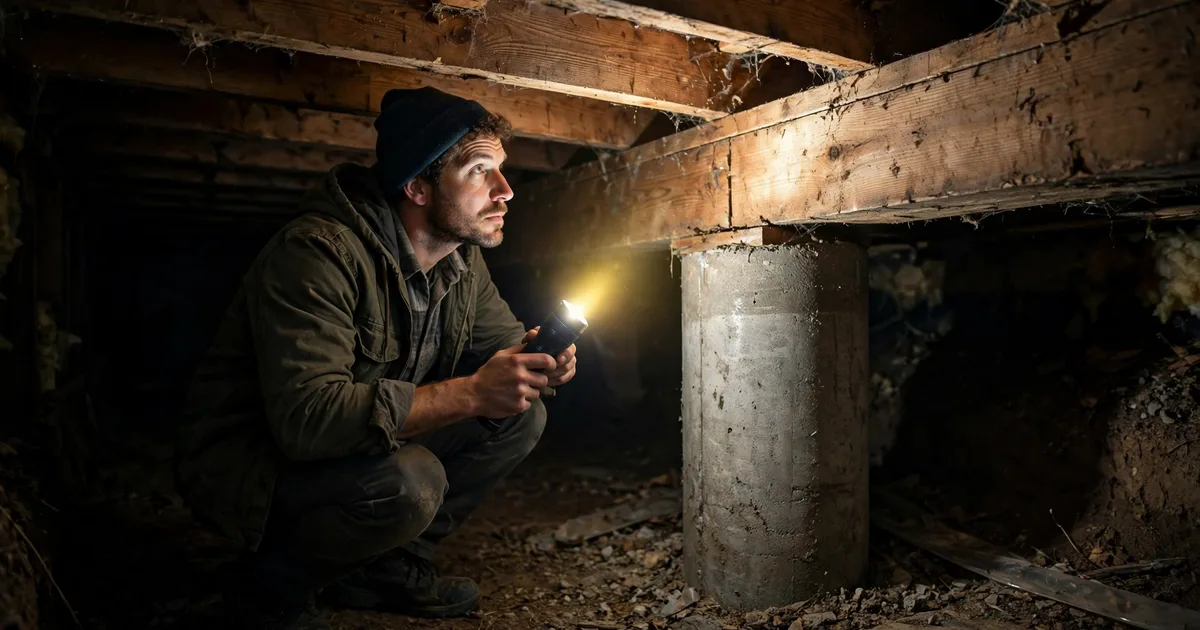
Table of Contents
- Why the Crawl Space Matters for Termite Findings
- What Inspectors Check in the Crawl Space
- Mud Tubes: Telling Active From Old
- Moisture, Debris, and Conditions That Invite Termites
- When Access Is Limited
- What Homeowners Can Do Between Inspections
- When to Call a Professional
- Frequently Asked Questions
Why the Crawl Space Matters for Termite Findings
Subterranean termites nest in the ground and send workers out to find wood. Because the workers dry out quickly in open air, they travel inside mud tubes or through the soil itself, and the first wood they reach is usually the framing at the bottom of the house. In finished rooms, that framing hides behind drywall and flooring, so damage can continue for a long time before anyone notices. In the crawl space, the lowest wood in the home — the sill plates that sit on the foundation and the joists that carry the floor — is in plain view.
That visibility is why a crawl space examination anchors so many inspections. Tubes climbing a pier, a soft stretch of sill, or a cluster of tubes around a plumbing penetration tells the inspector where termites are entering and where to look harder inside the home. Our complete guide to termites in Central Valley homes explains how subterranean colonies forage and spread, and our guide to termite mud tubes on a foundation covers the tubes themselves in more detail.
What Inspectors Check in the Crawl Space
An inspector moves through the crawl space methodically, usually with a flashlight, a probing tool, and a way to record findings by location. The work combines looking for termite evidence directly and noting the conditions that support an infestation.
| What inspectors check | What they are looking for |
|---|---|
| Foundation piers and stem walls | Mud tubes climbing from the soil to the wood above, including tubes hidden on the far side of a pier |
| Sill plates and floor joists | Tubes, surface damage, and wood that sounds hollow or feels soft when tapped or probed |
| Plumbing penetrations and bath traps | Tubes and moisture where pipes pass through the floor, a common entry point near a steady water source |
| Soil surface | Wood debris, leftover form boards, stumps, and other cellulose resting on or buried in the soil |
| Moisture conditions | Standing water, plumbing leaks, damp soil, and drainage that runs toward the foundation |
| Ventilation | Blocked, missing, or damaged vents and signs of condensation on wood and pipes |
Tubes and damage get the closest attention. A single tube on one pier may mean termites found one route upward; tubes at several piers, moisture staining, and hollow-sounding joists in the same area suggest a longer-running problem. Inspectors also sound wood that looks fine on the surface, because subterranean termites eat along the grain inside a member and can leave only a thin shell of wood intact. Findings are recorded against a diagram of the structure, so each spot can be located again later. Our walkthrough of what a termite inspection includes describes how the crawl space fits into the full inspection.
Mud Tubes: Telling Active From Old
A mud tube proves termites used that route at some point, but it does not by itself prove they are using it today. Tubes can remain standing long after a colony has died out or moved, so part of the inspector’s job is judging whether a tube is active or old.
Active tubes tend to look intact and maintained: the surface is unbroken, the soil in the tube may feel slightly moist, and a small section opened by the inspector may reveal live termites moving inside. Old tubes are usually dry, brittle, and crumbling, often broken, dusty, or draped with cobwebs. Sometimes an inspector notes a broken tube and, on a follow-up visit, checks whether termites have repaired it — rebuilding is a strong sign of current activity.
No single clue settles the question. A dry tube might connect to activity elsewhere in the structure, and a tube with no termites visible at that moment may still be in use at other hours. Inspectors weigh the tube’s condition alongside moisture readings, the state of the wood above it, and evidence in the rest of the home before calling activity active or inactive. For ongoing watch after an inspection, termite monitoring systems can track activity in the soil around the home between visits.
Moisture, Debris, and Conditions That Invite Termites
Crawl spaces that stay damp are the ones subterranean termites favor, because the workers need moisture and the wood they eat stays more workable when it is humid. Inspectors note standing water after rain or irrigation, dripping supply lines and drain leaks, and soil that slopes toward the foundation instead of away from it. A leaking pipe above a pier can keep one area wet enough to support tubes and feeding year-round, and fixing the leak is part of addressing the infestation, not a separate housekeeping item. Our article on moisture and termites: why leaks and poor drainage attract them goes deeper on how water problems and termite problems feed each other.
Debris matters just as much. Builders sometimes leave form boards — the wood used to shape poured concrete — lying on the soil, and homeowners add offcuts, cardboard, and stored firewood over the years. Every piece of wood resting on damp soil is both a food source and a bridge that lets termites reach the framing. Rooted stumps and buried wood close to the foundation do the same work outside. Inspectors record these conditions because they explain how termites got started and because leaving them in place invites the problem to return.
When Access Is Limited
Not every crawl space can be fully inspected. Clearance under some homes is too low to move through safely, ductwork and insulation can block whole sections, and stored items piled against the access opening can keep an inspector out of parts of the subarea. In some homes the access opening itself is small, sealed, or hidden behind fixtures.
When that happens, the inspector examines everything reachable and records the inaccessible areas in the report rather than guessing about them. That note matters: an uninspected section is an open question, and transactions or treatment decisions that depend on it may call for a further inspection once access is provided. Homeowners can help before the visit by clearing the access opening, moving stored items away from it, and mentioning known plumbing locations. Our checklist on how to prepare for a termite inspection covers access and the rest of the preparation steps.
What Homeowners Can Do Between Inspections
The most useful homeowner steps target debris and moisture. Pull wood scraps, form boards, and stored lumber off the crawl space soil, and store firewood outside and away from the foundation rather than under the house. Fix dripping pipes and leaking drains promptly, extend downspouts so roof water discharges away from the foundation, and correct low spots where water ponds against the stem wall. Keep foundation vents clear of plants, soil, and stored items so air can move through the space.
It is also worth looking, from outside, at the visible foundation line a few times a year: tubes on an exterior stem wall are often visible without going under the house at all. Homeowners should not break up tubes or scrape them off before an inspection, though — the tube’s condition is evidence, and leaving it intact helps the inspector judge whether activity is current.
When to Call a Professional
Call for an inspection if you see mud tubes on piers, stem walls, or the foundation, if a floor feels soft or a joist or sill looks damaged, if you find swarmers or discarded wings indoors, or if you are buying or selling a home and need the crawl space documented. It is also worth calling when you have had a leak under the house, since the combination of moisture and hidden wood is exactly where subterranean colonies establish themselves.
After an inspection, the findings determine the recommendations, which may include treating active areas, correcting moisture conditions, removing debris, or monitoring. Treatments are applied according to the product label and California regulations. Pentecost Pest Control is a family-owned company at 3501 Coffee Rd in Modesto providing termite inspection, monitoring, and treatment across San Joaquin and Stanislaus Counties, and our termite control service page explains how the process starts.
Frequently Asked Questions
Can I check my own crawl space for termites?
You can look for the obvious signs — mud tubes on piers and walls, wood debris on the soil, standing water — and that kind of check between inspections is worthwhile. A professional inspection adds the parts that are easy to miss: sounding wood that looks sound, judging whether tubes are active, and reaching areas that take experience and equipment to examine safely.
How can an inspector tell if a mud tube is active?
By the tube’s condition and what is inside it. Active tubes are intact and maintained, may feel slightly moist, and can contain live termites when a small section is opened. Old tubes are dry, brittle, and often broken or dusty. Inspectors also weigh the surrounding evidence, since a tube alone does not always settle the question.
What happens if my crawl space is too tight or blocked to inspect fully?
The inspector examines what can be reached and notes the inaccessible areas in the findings, so the report is clear about what was and was not seen. If those areas matter to a decision — a home purchase, for example — a further inspection can be scheduled once access is improved, such as by clearing stored items or enlarging an opening.
Does standing water in the crawl space attract termites?
It contributes to the conditions subterranean termites need. They require moisture, and persistently damp soil and wood under a home make it easier for a colony to establish and keep feeding. Correcting leaks, drainage, and ponding is a standard part of reducing termite pressure, alongside any treatment of active infestation.
Should I remove wood debris from the crawl space myself?
Yes — removing scrap wood, form boards, and other cellulose resting on the soil is a reasonable homeowner step, and it removes both food and a bridge to the framing. Leave mud tubes and any damaged structural wood in place until an inspector has seen them, since their condition is part of the evidence.
Wondering what is happening under your house? Call (209) 581-5562 or request a free estimate to schedule an inspection.
By the Pentecost Pest Control Editorial Team
This article is for general educational purposes only. Pest conditions, regulations, and treatment options vary by property and situation. Contact a licensed pest control professional for an inspection.