
The most reliable signs of termites in your home are mud tubes on the foundation, small piles of pellet-like droppings (frass) under wood, discarded wings near windows, wood that sounds hollow when tapped, and paint that blisters over hidden tunneling. Termites rarely show themselves directly, so finding them means reading these clues room by room — starting where moisture and wood meet, in kitchens, bathrooms, and crawl spaces, and finishing with the attic, garage, and the outside of the foundation. In the Central Valley, subterranean termites are the main concern, but drywood termites leave their own distinct evidence, and this checklist covers both.
Key Takeaways
- Mud tubes, frass piles, discarded wings, hollow-sounding wood, and blistered paint are the signs to look for.
- Kitchens, bathrooms, crawl spaces, and other moisture-prone areas deserve the closest attention.
- Subterranean termite signs cluster low, near soil and plumbing; drywood signs often appear higher, around windows, eaves, and attic wood.
- Work through the home in a set order — interior rooms, then attic and crawl space, then garage and exterior — so nothing gets skipped.
- Any confirmed sign is a reason to schedule a professional inspection rather than wait for the next season.
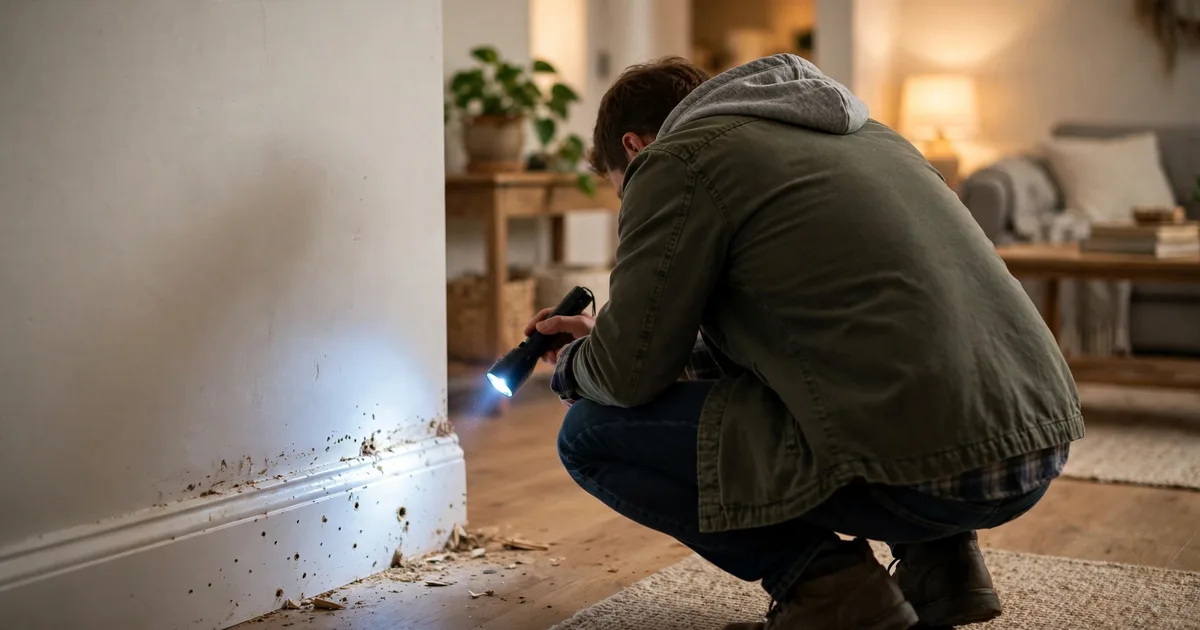
Table of Contents
- Before You Start: What You Are Looking For
- Kitchen
- Bathrooms and Laundry Room
- Living Areas and Bedrooms
- Attic
- Crawl Space and Basement Areas
- Garage
- Exterior and Foundation
- When to Call a Professional
- Frequently Asked Questions
Before You Start: What You Are Looking For
Grab a flashlight and something to tap wood with, such as the handle of a screwdriver. You are checking for five things throughout the house: mud tubes, frass, wings, hollow or soft wood, and surface damage like blistered paint or sagging floors. Note where you find each sign — location matters, because signs near soil and plumbing usually point to subterranean termites, while frass and pinholes in wood well above the ground point to drywood termites. Our article Drywood vs Subterranean Termites: How to Tell the Difference explains how to read those clues. For the full background on termite behavior in our area, see our guide to termites in Central Valley homes.
Kitchen
Kitchens combine water lines, cabinets, and food storage, which makes them one of the most common indoor locations for termite evidence.
- Check under the sink for damp cabinet floors, soft wood, or mud tubes where pipes pass through the wall or floor.
- Look along the baseboards behind and beside the refrigerator and dishwasher — slow appliance leaks keep these areas moist.
- Tap the kick plates and lower cabinet frames; hollow sounds or wood that crumbles easily deserve a closer look.
- In spring, check windowsills and the floor near doors for discarded wings or dead winged insects after warm, rainy days.
- If you have a pantry with wood shelving, look underneath shelves for frass pellets, a drywood sign.
Bathrooms and Laundry Room
Bathrooms and laundry rooms have the most plumbing in the house, and plumbing leaks are one of the strongest termite attractants.
- Inspect around tub and shower surrounds, especially where tile meets the wall and where caulking has failed.
- Check the floor around the toilet base and under the vanity for soft spots, discoloration, or a floor that feels spongy.
- Open the access panel behind a tub or shower if there is one, and look for mud tubes on the framing or subfloor.
- In the laundry room, check behind the washer where hoses and drain lines enter the wall, and along the base of any water heater platform.
- Look for paint that bubbles or peels on bathroom walls and window trim for no obvious reason — termites tunneling just beneath the surface can cause this.
Living Areas and Bedrooms
Main living spaces show fewer signs, but the signs that do appear here are often the first ones homeowners notice.
- Windowsills and window frames: look for discarded wings, dead swarmers, or frass caught in corners and cobwebs.
- Tap baseboards and door frames, particularly on exterior walls and near any wall that shares plumbing with a bathroom or kitchen.
- Check wood flooring for areas that sound hollow, feel soft, or have begun to sag or separate.
- Look at wood trim and any built-in shelving for tiny pinholes with pellets below them — a drywood indicator.
- In spring, after rain, watch for live winged termites emerging indoors or gathering at lights; note the room, because it helps an inspector narrow the search. Winged insects are not always termites, though — our article “Termite Swarmers vs Flying Ants: How to Identify Each One” covers how to tell them apart.
Attic
Attics hold exposed framing, which makes them a key inspection area for both termite types — and one homeowners rarely visit.
- Shine the flashlight along rafters, joists, and the wood around the attic access hatch for frass piles on the insulation or framing below wood members.
- Check where the roof meets the walls and around vent openings, where drywood swarmers can enter.
- Look for mud tubes running up from wall tops or along pipes and ducts that pass into the attic from the crawl space or slab.
- Note any wood that looks darkened or damp near roof leaks; moisture from a leak raises the risk for several wood-destroying pests.
- Check stored items — cardboard boxes and wood furniture kept in the attic can harbor drywood termites unnoticed.
Crawl Space and Basement Areas
Most Central Valley homes sit on a raised foundation or a slab rather than a full basement, and the crawl space is where subterranean termites are most often found first.
- Look for mud tubes on concrete piers, stem walls, and the underside of the subfloor — this is the classic subterranean pathway into a home.
- Tap sill plates and the ends of floor joists where they rest on the foundation; these are common feeding points.
- Check for wood debris, old form boards, or scrap lumber left on the soil, which can support a colony right under the house.
- Note standing water, plumbing drips, or soil that stays wet against the foundation, and plan to correct those moisture sources.
- For slab homes, check where pipes come through the slab in bathrooms and the kitchen, and watch expansion joints and cracks in the garage slab for tubes.
Garage
Garages combine exposed framing, stored wood, and slab edges, so they reward a careful look.
- Check the base of the wall framing where studs meet the slab, a favorite subterranean entry line.
- Look along slab cracks and the joint between the garage floor and the foundation for mud tubes.
- Inspect stored lumber, firewood, and cardboard stacked against walls for frass, pinholes, or hollow wood.
- Check door frames — both the pedestrian door into the house and any wood trim around the overhead door — by tapping and looking for softness.
- Note any wings collected in corners or webs in spring and fall, which can indicate swarm activity inside the structure.
Exterior and Foundation
Finish outside, where many infestations begin and where prevention does the most good.
- Walk the full perimeter looking for mud tubes on the exposed foundation, from the soil line up to the siding.
- Check every place wood meets soil: fence posts and gates attached to the house, deck posts, trellises, and wood steps.
- Look at eaves, fascia, and exterior window trim for pinholes, blistered paint, or frass — drywood termites often start in these exposed pieces.
- Note mulch piled against the foundation, soil graded so it touches siding, and irrigation that sprays the walls; each one keeps moisture against the structure.
- Check tree stumps, dead roots, and landscape timbers near the house, which can hold subterranean colonies close to the foundation.
If your walk turns up any of these signs, our termite inspection guide for California homeowners explains what a professional inspection covers and how findings are reported. You can also read more about our approach on the termite control service page.
When to Call a Professional
Call when you find mud tubes, frass that returns after cleaning, discarded wings indoors, or wood that sounds hollow or crumbles when probed. Call as well if you are unsure whether what you found is termite evidence at all — water damage, carpenter ants, and old inactive damage can look similar, and the right response differs for each. A professional inspection confirms what is present and where. Treatments are applied according to the product label and California regulations. Pentecost Pest Control is family-owned, based at 3501 Coffee Rd in Modesto, and serves homes across Stanislaus and San Joaquin Counties.
Frequently Asked Questions
What is the most common first sign of termites in a home?
For subterranean termites, homeowners most often notice swarmers or discarded wings in spring, or mud tubes found during yard work or a crawl space check. For drywood termites, the usual first sign is a small pile of frass pellets under furniture, a window frame, or attic wood. Many infestations produce no obvious sign at all until an inspection, which is why periodic professional checks are worthwhile in our area.
Can I have termites without seeing any of these signs?
Yes. Termites feed inside wood and travel through hidden routes, so a colony can be active behind finished walls or under floors with little surface evidence. The checklist improves your odds of catching activity early, but it does not replace an inspection of the places homeowners cannot easily reach, such as wall voids and the full crawl space.
I found wings on a windowsill. Are they definitely from termites?
Not necessarily. Winged ants shed their wings too, and the two insects are easy to confuse at a glance. Termite swarmers have straight antennae, a broad waist with no pinched segment, and two pairs of wings of equal length. Saving a few insects in a sealed jar helps an inspector identify them quickly.
Should I break open a mud tube or scrape off frass to check for activity?
You can note the location and take a photo, but resist tearing into walls or wood to investigate on your own — that can scatter evidence without answering the question, and disturbing a tube does not stop a colony. An inspector can judge whether tubes and frass are fresh or old and check the surrounding structure in a systematic way.
How often should I walk through this checklist?
Once or twice a year works well for most homes — spring, when subterranean swarmers are active, and fall, when drywood swarmers fly. Check sooner if you have had a plumbing leak, roof leak, or drainage problem, since new moisture can change conditions quickly.
Finished your walk-through and found something — or just want a professional set of eyes on the crawl space? Call (209) 581-5562 or request a free estimate to schedule an inspection.
By the Pentecost Pest Control Editorial Team
This article is for general educational purposes only. Pest conditions, regulations, and treatment options vary by property and situation. Contact a licensed pest control professional for an inspection.