
The fastest way to tell drywood vs subterranean termites apart is to look at where they live. Subterranean termites nest in the soil, travel up into a home through mud tubes, and need contact with moisture to survive. Drywood termites live entirely inside the dry wood they eat — furniture, framing, trim, and eaves — and never need the ground at all. That single difference in nesting explains almost every sign you will find, and it is why the two types call for different inspection and treatment approaches. In Modesto and across the Central Valley, subterranean termites are the main structural concern, but drywood termites occur in California, including inland areas, and both show up in local homes.
Key Takeaways
- Subterranean termites live in the soil and reach wood through pencil-thin mud tubes; drywood termites live inside dry wood itself.
- Subterranean termites are the primary structural concern in the Central Valley, while drywood colonies tend to stay smaller and more localized.
- Drywood infestations often reveal themselves through frass — small, hard pellets pushed out of tiny kick-out holes in wood.
- Subterranean swarmers usually appear in spring after rain; drywood swarmers typically fly in late summer or fall.
- Correct identification matters, because the two types are inspected for and addressed in different ways.
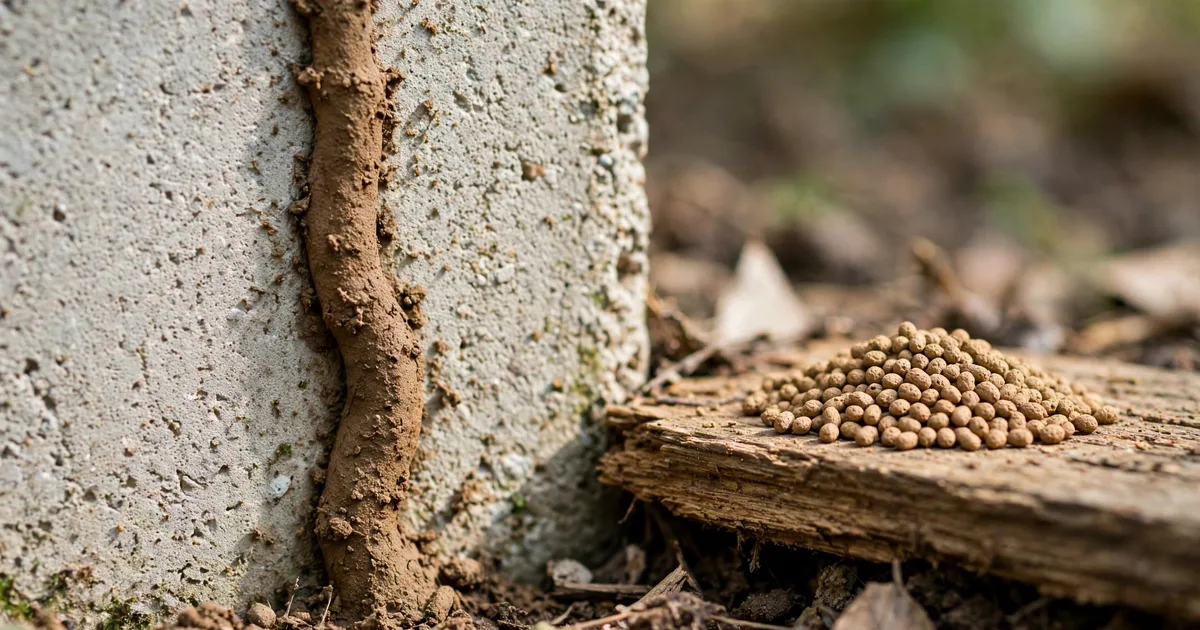
Table of Contents
- The Short Answer: Where Each Termite Lives
- How to Tell Them Apart
- Signs of Subterranean Termites
- Signs of Drywood Termites
- Swarmers and Swarm Seasons
- Why the Difference Matters for Treatment
- Prevention Basics for Both Types
- When to Call a Professional
- Frequently Asked Questions
The Short Answer: Where Each Termite Lives
Subterranean termites build their colonies underground. Workers leave the nest to forage, and because their bodies dry out quickly in open air, they build covered mud tubes to travel between the soil and the wood in your home. They are drawn to moisture, so they often appear where wood meets damp soil, near plumbing leaks, or in crawl spaces with poor drainage. Our complete guide to termites in Central Valley homes covers their habits in more depth.
Drywood termites take the opposite approach. A pair of swarmers lands on exposed wood, sheds its wings, and starts a colony right inside that piece of wood. The colony needs no soil contact and no outside moisture source beyond what the wood itself holds. Because they live where they eat, drywood infestations are often confined to one area — a window frame, a piece of furniture, an attic beam, or a section of fascia — though more than one colony can be present in the same structure.
How to Tell Them Apart
Most homeowners never see the termites themselves; they see the evidence. The table below compares the clues each type leaves behind.
| Feature | Subterranean Termites | Drywood Termites |
|---|---|---|
| Where the colony lives | Underground in the soil | Inside the dry wood it feeds on |
| Connection to the ground | Required; workers travel back and forth | None needed after swarmers enter the wood |
| Travel tubes | Mud tubes on foundations, piers, and walls | No mud tubes |
| Droppings | Not typically visible around the home | Frass: hard, oval pellets pushed out of kick-out holes |
| Typical entry points | Foundation cracks, wood-to-soil contact, crawl spaces | Exposed exterior wood, eaves, vents, attic wood, furniture |
| Usual swarm season in our area | Spring, often after rain | Late summer into fall |
| Common first sign | Mud tubes or spring swarmers indoors | Small piles of pellets below wood, or fall swarmers |
If you find evidence and cannot match it to either column, save a sample of any insects or pellets in a sealed container. Identification drives everything that follows, and a professional inspection can confirm which type is present. Our termite inspection guide for California homeowners explains what that inspection involves.
Signs of Subterranean Termites
Because subterranean termites approach from the ground up, their signs concentrate low in the structure:
- Mud tubes about the width of a pencil running up foundation walls, concrete piers, or inside a crawl space. Termites build these to stay moist and hidden while traveling.
- Wood that sounds hollow when tapped near the base of walls, especially where wood sits close to soil.
- Spring swarmers indoors — winged termites emerging near windows or lights, or piles of discarded wings on sills — often shortly after a warm rain.
- Soft or damaged wood at ground level, including door frames, baseboards near plumbing, and subfloor areas above damp crawl spaces.
Subterranean activity can be present even when only one of these signs appears, and tubes are sometimes hidden behind stored items or finished walls. A more detailed room-by-room approach appears in our article “Signs of Termites in Your Home: A Room-by-Room Checklist.”
Signs of Drywood Termites
Drywood termites announce themselves differently, and often higher up in the home:
- Frass piles that look like coarse sand, pepper, or tiny seeds beneath wood. The pellets are the colony’s droppings, pushed out through small kick-out holes. Fresh piles that reappear after you sweep them up suggest active feeding above.
- Tiny pinholes in wood or paint where frass is expelled, sometimes with pellets caught in spider webs below.
- Blistered or bubbled paint on wood trim, caused by tunneling just under the surface.
- Discarded wings in late summer or fall near windows, in attics, or around exterior wood — drywood swarmers shed their wings soon after landing.
Because a drywood colony stays inside a single piece or section of wood, damage is usually localized. The catch is that colonies can go unnoticed for a long time in attics, eaves, and stored furniture, and more than one piece of wood can be infested at once.
Swarmers and Swarm Seasons
Both types produce winged swarmers — the reproductive termites that leave to start new colonies — but they fly at different times of year in the Central Valley. Subterranean swarmers typically emerge on warm spring days, often following rain. Drywood swarmers usually fly later, in late summer and into fall, frequently on warm evenings.
The timing of an indoor swarm is therefore a useful clue. A spring swarm points toward subterranean termites; a fall swarm points toward drywood. Either way, swarmers indoors (or piles of their wings) mean a colony is nearby or already in the structure, and it is worth having the home inspected. If you are looking at winged insects and are not sure they are termites at all, our article “Termite Swarmers vs Flying Ants: How to Identify Each One” walks through how to separate termites from winged ants.
Why the Difference Matters for Treatment
Identification comes first because the two types are not addressed the same way. Subterranean termite work focuses on the soil and the points where termites move between the ground and the structure, along with correcting the moisture conditions that attract them. Drywood work focuses on the infested wood itself — the options depend on whether the infestation is confined to an accessible piece of wood or spread through areas that are hard to reach.
Treatments are applied according to the product label and California regulations. Which approach fits a given home depends on the termite type, where activity is found, and how far it extends — factors an inspection is designed to establish. If cost is part of your decision, our overview of termite treatment cost factors explains what affects the scope of a job without quoting prices sight unseen.
Prevention Basics for Both Types
You cannot make a home termite-proof, but you can make it less inviting:
- Keep wood, mulch, and firewood from contacting the soil right against the foundation, and store firewood away from the house.
- Fix plumbing leaks and correct drainage so soil near the foundation stays as dry as practical, especially around crawl spaces.
- Seal cracks in the foundation and gaps around pipes and utility lines where subterranean termites can enter unseen.
- Keep attic and crawl space vents screened so drywood swarmers have fewer ways into exposed wood.
- Reduce wood-to-ground contact on fences, decks, and trellises attached to the house.
- Check exposed exterior wood — eaves, fascia, and trim — for pinholes or pellet piles when you do seasonal maintenance.
Our termite control service page describes how Pentecost Pest Control approaches inspection, monitoring, and treatment for homes in Stanislaus and San Joaquin Counties.
When to Call a Professional
Call for an inspection when you find mud tubes on the foundation, pellets that keep reappearing under wood, winged termites swarming indoors, or wood that sounds hollow or feels soft. Also call before buying or selling a home, since termite activity affects the structure and is far easier to address when caught early. A professional inspection confirms which type of termite is present (or whether the evidence points to something else entirely, such as old damage or a different wood-boring insect) and maps where activity is located, so treatment is based on findings rather than guesswork. Pentecost Pest Control is a family-owned company at 3501 Coffee Rd in Modesto, and we inspect homes throughout San Joaquin and Stanislaus Counties.
Frequently Asked Questions
Which type of termite is more common in the Modesto area?
Subterranean termites are the main structural concern in the Central Valley because local soils and irrigation keep ground moisture available around foundations. Drywood termites also occur in California, including inland communities, and are found in furniture, framing, and exterior wood. Either type is worth an inspection when signs appear.
Can a home have both drywood and subterranean termites?
Yes. The two types live in different places — one in the soil, one in dry wood — so nothing prevents both from being active in the same structure. An inspection checks for both, since treating for one type does not address the other.
Are the pellets under my wood definitely termite frass?
Piles of hard, oval pellets beneath wood are a classic drywood sign, but other insects and even old, inactive infestations can leave similar-looking material. Fresh pellets that return after cleaning suggest current activity. An inspector can examine the pellets and the wood above them to confirm what produced them.
Do mud tubes always mean an active infestation?
Not always. Mud tubes can remain after activity has ended, and empty tubes are common on older foundations. However, tubes should never be dismissed without a closer look, because active colonies rebuild and extend them. Breaking a small section and checking whether it is repaired within a short period is sometimes used to gauge activity, but an inspection gives a fuller picture of what is happening around the structure.
If I see swarmers, does that mean my house is infested?
Swarmers indoors strongly suggest a colony in or very near the structure, and discarded wings on inside sills are a reliable reason to schedule an inspection. Swarmers seen outdoors in the yard are less conclusive — they may come from a colony in a stump, fence, or nearby soil — but they still show termites are active in the immediate area.
Ready to have your home checked? Call (209) 581-5562 or request a free estimate and tell us what you have been seeing — we will start with an inspection and explain the findings before recommending anything.
By the Pentecost Pest Control Editorial Team
This article is for general educational purposes only. Pest conditions, regulations, and treatment options vary by property and situation. Contact a licensed pest control professional for an inspection.