
A termite inspection does not run on a fixed clock. How long does a termite inspection take? The honest answer is that the visit lasts as long as the home requires: a compact home with open access and nothing to document is a relatively short appointment, while a large home with a full crawl space, an attic, and evidence in several areas takes considerably longer. Most of the variation comes from a handful of things — the size and construction of the home, how easily the inspector can reach the attic and crawl space, how much evidence there is to examine and record, whether additional structures are included, and the findings review that closes the visit.
Knowing what drives the length helps you plan your day and, just as usefully, helps you shorten the visit where you can. Access is the factor homeowners control most, and it is also the one that most often stretches an appointment. This article walks through each factor, what the inspector is doing while the time passes, and the situations that make an inspection run long.
Key Takeaways
- There is no standard duration for a termite inspection; the length follows the home’s size, construction, access, and findings.
- Most of the time goes to the physical inspection pass — exterior, interior, attic, and crawl space — plus documenting evidence and reviewing findings with you.
- Blocked attic hatches and crawl space entries are the most common avoidable delay, and areas that stay blocked may be recorded as inaccessible rather than inspected.
- Extensive findings, several affected areas, and spots that need a further look all lengthen the visit, because each one has to be examined and written up.
- Clearing access ahead of time is the simplest way to keep the appointment efficient and complete.
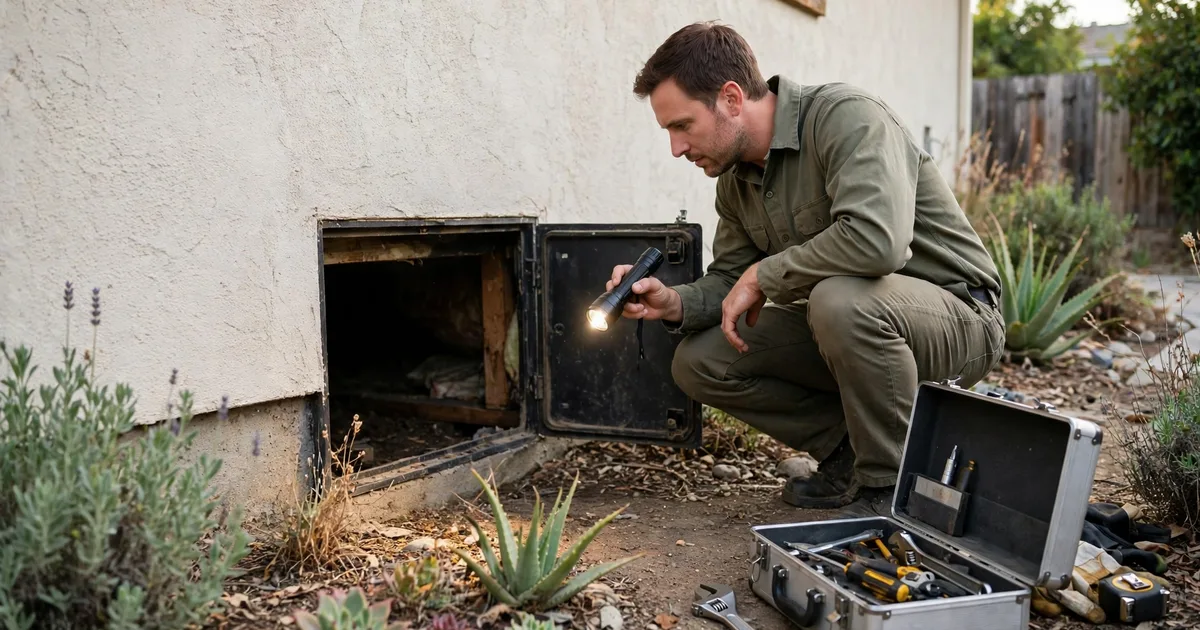
Table of Contents
- What the Inspector Is Doing With That Time
- Factor by Factor: What Lengthens or Shortens a Visit
- Access Problems and Blocked Areas
- When Inspections Run Long
- How Homeowners Can Keep the Visit Efficient
- When to Call a Professional
- Frequently Asked Questions
What the Inspector Is Doing With That Time
An inspection is a methodical pass through the home, not a quick walk-through. The inspector works the exterior first, reading the foundation line for mud tubes and the conditions that invite termites, then moves room by room inside, checking windowsills, baseboards, and door frames, with extra attention to plumbing areas and the garage. The attic and crawl space come next, because those are the spaces where framing is exposed and hidden activity is most often confirmed or ruled out. Along the way, suspect wood is sounded with a tap to check for the hollow response that suggests tunneling behind an intact surface.
The second half of the work is documentation. Every finding — a tube, a frass pile, a hollow-sounding stretch of trim, a moisture condition — is located and recorded, and so is every area the inspector could not reach. The visit closes with a review: what was found, where, whether it looks active or old, and what the options are. Our step-by-step walkthrough of what a termite inspection includes follows that sequence in detail, and our termite inspection guide for California homeowners puts the visit in its wider context. The point for planning purposes is simple: anything that adds areas to the pass, or findings to the record, adds time.
Factor by Factor: What Lengthens or Shortens a Visit
| Factor | Effect on the visit’s length |
|---|---|
| Home size and layout | More rooms, more framing, and a longer foundation line to examine stretch the physical pass |
| Construction type | Crawl spaces, raised foundations, additions, and multi-level construction each add areas that must be entered and checked |
| Attic and crawl space access | Open, reachable entries keep things moving; blocked entries add clearing time or leave areas uninspected |
| Amount of evidence found | Each tube, frass pile, and damaged member is examined, located, and recorded, so a home with activity takes longer |
| Additional structures | Detached garages, workshops, and other structures included in the inspection each get their own pass |
| Findings review | The closing walkthrough of what was found runs longer when there is more to explain and more options to discuss |
None of these factors works alone. A small home can still produce a long visit if the crawl space is packed with findings, and a large home with clear access and no evidence can move at a steady, unhurried pace without surprises. When you schedule, describing your home’s size, construction, and any signs you have noticed gives the inspector a reasonable basis for telling you what to expect — as a general shape for the appointment, not a promise about the clock.
Access Problems and Blocked Areas
Access is where visits most often lose time, because the inspector cannot examine what cannot be reached. An attic hatch blocked by shelving or storage, a crawl space entry covered by boxes or landscaping, garage walls hidden behind stacked items, and cabinets packed tight under sinks all have to be dealt with before the inspection can cover those areas — or they go unexamined.
There are two ways that plays out. If the items can be moved quickly and the homeowner is present to help, the visit absorbs the delay and continues, a little longer than planned. If the area genuinely cannot be opened — a hatch painted shut, an entry obstructed by something heavy, a locked space — the inspector documents it as inaccessible in the findings. That note matters: an uninspected attic or subarea is an open question, and clearing it usually means a return visit to finish the job. Either way, blocked access costs more time than clearing it beforehand would have.
When Inspections Run Long
Beyond access, a few situations reliably extend a visit. The first is extensive findings: evidence in several areas means each location is examined, sounded, and documented, and the inspector also traces how the findings connect — a tube outside and hollow wood on the other side of the same wall are one story told in two places. The second is a finding that raises a question the visible evidence cannot answer, such as surface damage that suggests concealed activity behind a finished wall. Those spots are recorded with a recommendation for further inspection, and explaining them at the review takes time as well.
Older homes and homes with additions can also run long, simply because there is more structure to cover and more variation in how it was built. None of this is wasted time. A longer visit driven by findings is the inspection doing its job — the alternative is a quick pass that misses the evidence the appointment existed to find.
How Homeowners Can Keep the Visit Efficient
The preparation that helps is unglamorous and entirely within the homeowner’s control. Make the attic hatch and crawl space entry reachable and openable, move stored items away from garage walls, clear a little space under sinks, unlock gates, and have pets settled somewhere out of the way. Leave any evidence you have found — frass piles, tubes, wings, a spot that sounds hollow — in place rather than cleaning it up, and point it out when the inspector arrives, since it gives the visit a head start. Our termite inspection preparation checklist lists the steps in the order most homeowners work through them.
It also helps to say, when scheduling, what you already know: the home’s approximate size, whether it has a crawl space or a slab, and any signs you have noticed and where. That information does not change what the inspector checks, but it lets the appointment be planned around the home as it actually is.
When to Call a Professional
Call to schedule an inspection when you have found wings, frass, mud tubes, or hollow-sounding wood, when you are buying or selling and need documented findings, or when parts of your home — an attic, a crawl space — have simply never been looked at. If you are planning around a busy day, say so when you book and describe the home; the visit can be scheduled with its likely shape in mind.
After the findings review, the next steps follow what was found. Where treatment is recommended, the options are explained in terms of the specific findings — what each approach addresses and what it does not. Treatments are applied according to the product label and California regulations. Pentecost Pest Control is a family-owned company at 3501 Coffee Rd in Modesto, serving homes throughout San Joaquin and Stanislaus Counties; our termite control service page outlines how service starts with an inspection like the one described here.
Frequently Asked Questions
Can the inspector tell me exactly how long my inspection will take when I schedule?
Not exactly, because the biggest variables — how much evidence turns up and how the findings connect — are only known once the inspection is underway. Describing your home’s size, construction, and access when you book supports a fair general expectation, but a home with unexpected findings will always take longer than the same home with none.
Why did my neighbor’s inspection finish faster than mine?
Probably because the homes, not the inspectors, differed. A smaller home, a slab foundation instead of a crawl space, open attic access, and no evidence to document all shorten a visit; a larger home with blocked entries and findings in several areas lengthens one. Comparing durations across different houses says little about how thorough either inspection was.
Does a longer inspection mean the home has termites?
No. Length follows size, access, and documentation as much as it follows findings. A big home with no activity can take a long while to cover properly, and a small home with one frass pile can be finished quickly once the finding is recorded. What matters is what the findings say, not how long the visit ran.
What happens if an area is blocked when the inspector arrives?
If it can be cleared quickly, the visit continues with a modest delay. If it cannot be opened, the area is recorded as inaccessible in the report — noted, not silently skipped — and you can arrange access later and have that area inspected on a return visit so the open question gets an answer.
Do I need to be home for the whole inspection?
Being present is helpful rather than required for every minute: you can point out anything you have noticed, answer questions about the home’s history and additions, and hear the findings review in person. Pets simply need to be kept clear of the areas being examined while the inspector is working in them.
Wondering how an inspection of your home would run on the day? Call (209) 581-5562 or request a free estimate — describe your home’s size and construction, and we will tell you what to expect.
By the Pentecost Pest Control Editorial Team
This article is for general educational purposes only. Pest conditions, regulations, and treatment options vary by property and situation. Contact a licensed pest control professional for an inspection.