
Moisture and termites are closely linked because subterranean termites cannot survive long in dry conditions. Their bodies lose water quickly, so colonies live in moist soil, travel through covered mud tubes that hold humidity, and favor wood that is already damp. A leak under a house, sprinklers wetting the foundation, or rainwater pooling against the structure creates exactly the conditions these termites need: wet soil for the colony, a humid path into the building, and softened wood that is easier to feed on. That is why inspectors treat moisture problems as termite problems, and why fixing the water matters as much as addressing the insects.
This article explains the connection in practical terms for Central Valley homeowners: where the moisture around a Modesto-area home usually comes from, what it does to wood over time, what an inspector looks for, and which fixes belong to a plumber, a roofer, a landscaper, or a pest control company. The fixes are ordinary repairs that move water away from a house and let the structure dry.
Key Takeaways
- Subterranean termites depend on moisture; damp soil and wet wood near a home are what allow colonies to live and feed there.
- The most common sources are plumbing leaks, irrigation aimed at the foundation, poor grading and drainage, and clogged gutters and downspouts.
- Chronic moisture also decays wood and supports other wood-destroying organisms, so the damage is not limited to termites.
- Inspectors read moisture as evidence: where wood stays wet is where termite activity and damage are most likely to be found.
- Most moisture fixes belong to plumbers, roofers, and landscapers; the pest control role is inspection, treatment of activity, and monitoring.
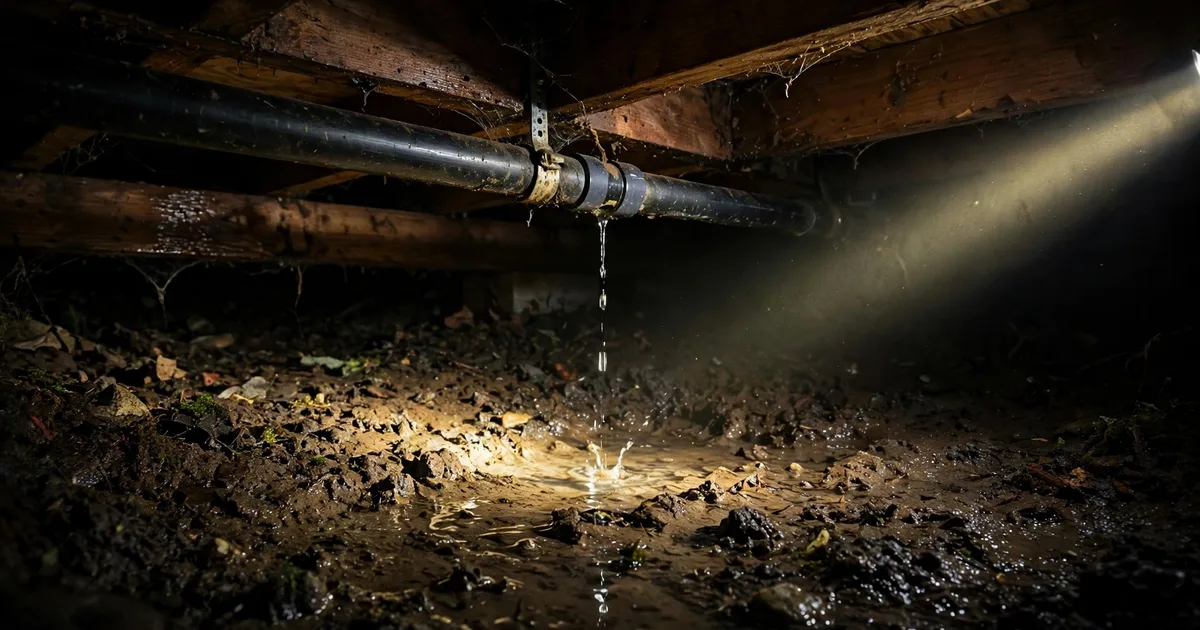
Table of Contents
- Why Subterranean Termites Need Moisture
- Where the Moisture Comes From
- Moisture in the Crawl Space
- What Chronic Moisture Does to Wood
- What an Inspector Looks For
- Fixing the Problem: Which Trade Does What
- When to Call a Professional
- Frequently Asked Questions
Why Subterranean Termites Need Moisture
Subterranean termites live in colonies in the soil and send workers out to forage for cellulose: wood, paper, cardboard, and plant debris. Workers have thin body coverings that dry out in open air, so the colony depends on the moisture in the ground, and workers build mud tubes, covered tunnels of soil and saliva, to cross exposed surfaces like foundation walls without drying out. When they find wood, damp wood serves them better: it is softer to chew, it supports the fungi that help condition it as food, and its moisture helps workers survive away from the soil longer.
A dry home on well-drained soil is therefore a harder target. Termites may still reach it, but the soil beside it does not support a large colony nearby, and dry framing is less appealing. A home with a plumbing leak under the bathroom, irrigation wetting the same stretch of foundation every day, and a low spot where rainwater stands after every storm is the opposite: it offers water, food, and shelter in one package. Our complete guide to termites in Central Valley homes covers how colonies forage and spread, and moisture is the thread that runs through their choices.
Where the Moisture Comes From
Most termite-friendly moisture around a home comes from a short list of ordinary sources. Plumbing leaks are the most persistent: a slow drip at a drain, supply line, or water heater can keep soil and framing damp for months because it runs in every season. Irrigation is the most common in the Central Valley summer, when sprinklers and drip lines run frequently; heads that spray the house, lines that leak at fittings, and planters against the wall all keep the soil at the foundation wet. Poor grading and drainage collect roof and surface water against the structure, and clogged gutters and downspouts dump concentrated water at the eaves and foundation.
| Moisture Source | Where You Notice It | Typical Fix and Trade |
|---|---|---|
| Plumbing leak | Damp soil or standing water in the crawl space, musty odor, soft subfloor near bathrooms or the water heater | Repair the pipe, drain, or fixture; plumber |
| Irrigation wetting the house | Wet soil, algae or moss on siding, damp foundation line | Adjust, move, or repair sprinkler heads and drip lines; homeowner or irrigation contractor |
| Poor grading and drainage | Water pooling against the foundation after rain, soil washed toward the house | Regrade soil to slope away, add drainage where needed; landscaper or drainage contractor |
| Clogged gutters and downspouts | Overflow at the eaves during rain, stained and damp fascia, water dumped beside the foundation | Clean gutters, repair sections, extend downspouts away from the house; homeowner or roofer |
| Crawl space humidity and standing water | Condensation, damp soil that never dries, musty air under the home | Clear blocked vents, correct the water source, improve drainage; depends on the source |
The pattern is that none of these sources look dramatic. A drip that fills a cup in a day, a sprinkler that mists the siding, a gutter that overflows only in hard rain: each is easy to live with and easy to postpone, and each maintains the conditions a colony needs. Seasonal habits that catch these sources early are laid out in our seasonal termite prevention checklist.
Moisture in the Crawl Space
The crawl space is where moisture problems concentrate, because it is enclosed, rarely visited, and sits on the soil the colony lives in. Plumbing runs through it, so leaks drip onto the ground below. Rainwater that grades toward the house enters at the foundation vents or seeps through the footing line. Once water is under the house, the enclosed space holds humidity against the subfloor, sill plates, and floor joists, the first members subterranean termites reach traveling up from the soil.
Signs of a wet crawl space include soil that stays damp long after rain, standing water in low areas, condensation on pipes, a persistent musty smell, and floor framing that looks darkened or feels soft. Blocked or covered vents make all of it worse by stopping the airflow that would otherwise dry the space between wettings. Keeping vents open, correcting any water source, and making sure the ground drains rather than ponds are the homeowner-side responses; when an inspection finds activity in these conditions, both the termites and the moisture belong in the findings, because treating one without the other leaves the invitation in place.
What Chronic Moisture Does to Wood
Termites are not the only reason wet wood is a problem. Wood that stays damp supports decay fungi that digest the fibers and leave wood soft, spongy, and weakened, a condition inspectors report alongside termite findings. Other wood-destroying organisms, including certain beetles and carpenter ants, also favor damp wood, so a chronically wet area can collect several kinds of damage at once. Moisture also swells and warps wood, cracks paint films, and stains finishes, which is why the problem often surfaces as a cosmetic one: bubbling paint, a door that sticks, a floor that feels uneven.
For termite risk specifically, the important effect is that decayed and damp wood is easier for termites to feed on, and feeding tends to concentrate where the wood is wettest. Damage found during an inspection is often a map of the home’s moisture history: the sill below the leaking shower, the joist ends under the planter, the fascia behind the clogged gutter. Fixing the moisture does not repair wood already damaged, and damaged members may need a contractor to evaluate and replace them, but drying the structure is what keeps the same spots from being damaged again.
What an Inspector Looks For
During an inspection, moisture is read as evidence. The inspector checks the foundation line for termite mud tubes, which appear most often where soil stays moist, and notes conditions such as wood-to-soil contact, leaking plumbing, and water staining on framing. In the crawl space and attic, suspect wood is sounded and probed, and damp areas get particular attention because that is where feeding and decay concentrate. The findings typically pair the pest evidence with the condition that supports it, so the homeowner sees not only what was found but why the area was vulnerable.
Our walkthrough of what a termite inspection includes describes this area-by-area process, and our termite inspection guide for California homeowners explains how findings and recommendations are documented. Homeowners who want ongoing detection after moisture problems are corrected can also consider monitoring: our article on termite monitoring systems explains how soil stations are checked on a schedule.
Fixing the Problem: Which Trade Does What
Moisture correction is home repair, and assigning each fix to the right trade keeps it from stalling. A plumber repairs leaking supply lines, drains, valves, and water heaters. A roofer or gutter contractor handles roof leaks, flashing, gutters, and downspouts. A landscaper or drainage contractor regrades soil, extends downspout discharge, and corrects irrigation that wets the house, though many irrigation adjustments are simple enough for a homeowner. A general contractor evaluates and replaces wood members that moisture and termites have damaged.
The pest control side has its own lane. Pentecost Pest Control inspects the structure, identifies whether activity is present and where, treats active infestations, and can monitor the property afterward; our termite control service page outlines those services for homes in San Joaquin and Stanislaus Counties. Where treatment is part of the plan, it follows the inspection findings. Treatments are applied according to the product label and California regulations. What pest control does not do is fix the plumbing or regrade the yard, and a report that recommends those corrections is pointing at the step that keeps the termite work from needing to be repeated.
When to Call a Professional
Call for an inspection when you find mud tubes on the foundation, notice a musty crawl space or a soft spot in a floor, discover a long-running leak wetting wood or soil, or see wings, droppings, or hollow-sounding wood anywhere in the home. Call when water stands against the foundation after every rain and you want to know whether termites have found it before you correct the drainage. Pentecost Pest Control is a family-owned company at 3501 Coffee Rd in Modesto, and an inspection establishes what is happening in the structure so the moisture repairs and any termite work can be planned in the right order.
Frequently Asked Questions
Do termites really need water, or just wood?
Subterranean termites need both, and moisture is the limiting factor. Workers dry out quickly away from damp soil, which is why colonies are based in the ground and why activity clusters around leaks, irrigation, and drainage problems. Drywood termites are the exception; they live inside wood and get their moisture from it, which is why they are associated with damp fascia and attic wood rather than soil.
Can fixing a leak get rid of termites by itself?
Fixing a leak removes the condition that supported the colony, an essential step, but it does not remove termites already feeding in the structure. An established infestation needs an inspection and, where findings support it, treatment. Drying the home out and addressing the activity are two halves of the same job.
My crawl space is damp but I see no termites. Should I still act?
Yes. A damp crawl space is a risk condition even before any activity is found, because it also decays framing and attracts other wood-destroying organisms. Correcting the water source, opening blocked vents, and improving drainage protect the structure regardless, and an inspection can confirm whether termites have already taken advantage.
Does standing water after rain really reach the termites that matter?
It does, because the colony lives in that soil. Water that ponds against the foundation keeps the soil at the base of the house moist, which is precisely where workers forage and where tubes start up the foundation wall. Grading that moves water away removes that moist starting point.
Who should I call first, a plumber or a pest control company?
It depends on what you have. An active leak you can see is a plumber’s job right away, since every day of leaking adds damage. If you have found tubes, droppings, damaged wood, or you are unsure whether termites are present, start with an inspection; the findings will also identify which moisture corrections matter most, and the trades can follow in a sensible order.
Water is the quiet half of most termite problems in Central Valley homes. If you suspect a leak, drainage problem, or hidden moisture has been at work around your home, Call (209) 581-5562 or request a free estimate and we will inspect the structure and tell you what we find.
By the Pentecost Pest Control Editorial Team
This article is for general educational purposes only. Pest conditions, regulations, and treatment options vary by property and situation. Contact a licensed pest control professional for an inspection.