
A termite warranty is a written agreement between a homeowner and a pest control company that spells out what the company will do if termite activity shows up again during a stated period after treatment. It is not a promise that termites will never return. It is a service commitment with defined terms: what is covered, what is not covered, how long the coverage runs, and what the homeowner has to do to keep it in effect. Re-inspection is the follow-up visit — or series of visits — in which the company checks the home again for activity, whether on a schedule, at renewal time, shortly after a treatment, or when a homeowner reports a concern.
Homeowners in Modesto and across San Joaquin and Stanislaus Counties often hear the word “warranty” during a treatment proposal without getting a plain explanation of what it actually commits anyone to. This article explains how termite warranties and re-inspection generally work in the industry, what they typically cover and leave out, and the questions worth asking before you rely on one.
Key Takeaways
- A termite warranty is a written service agreement that describes what happens if activity returns during a stated period — it is not a promise that termites will never come back.
- Coverage varies widely from one company to the next, so the written details matter far more than the word “warranty” itself.
- Re-inspection is a follow-up check for activity, done on a schedule, at renewal, after treatment, or during a home sale.
- Warranties typically do not cover repair of wood already damaged by termites; that work is usually a separate scope handled by a contractor.
- Keeping a warranty in effect usually depends on the homeowner too — allowing scheduled inspections and correcting moisture or wood-to-ground contact conditions.
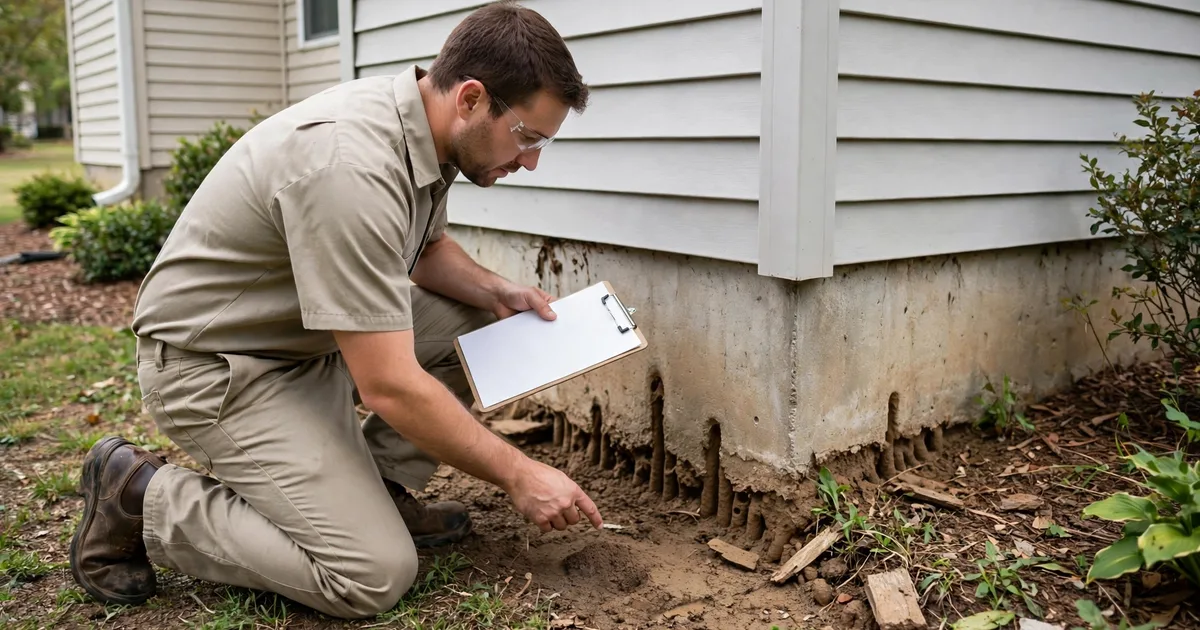
Table of Contents
- What a Termite Warranty Is
- What Warranties Typically Cover and Leave Out
- A Warranty Is Not a Promise of No Termites
- What Re-Inspection Means and When It Happens
- Questions to Ask About Any Warranty
- When to Call a Professional
- Frequently Asked Questions
What a Termite Warranty Is
In the pest control industry, a termite warranty is usually part of, or attached to, a treatment agreement. The treatment itself addresses the activity found during an inspection. The warranty looks forward: it describes the company’s obligations during a coverage period that follows, most importantly what the company will do if live termites are found again in the covered areas. Depending on how the agreement is written, that response might be a return inspection, retreatment of the affected area, or both.
Companies structure these agreements in their own ways. One company’s warranty may apply only to the specific areas that were treated. Another may describe coverage for the whole structure. Some run for a set term with an option to renew; others continue as long as the homeowner keeps up scheduled re-inspections. Because there is no single standard form, the only reliable way to know what a warranty means is to read the actual document and compare its terms with what you were told verbally. If the two differ, the written terms are the ones that govern.
It also helps to know that a warranty is a service document, not an insurance policy and not a repair contract. It describes services a company will perform under stated conditions. Keeping that distinction in mind makes the next section — what is usually in and out of coverage — much easier to evaluate.
What Warranties Typically Cover and Leave Out
Although every agreement is different, termite warranties across the industry tend to include and exclude similar categories. The table below shows the common pattern; your own agreement’s wording always controls.
| Commonly covered | Commonly not covered |
|---|---|
| A return visit to inspect activity the homeowner reports during the term | Repair of wood already damaged by termites |
| Retreatment of covered areas where active termites are found | Areas or structures never included in the original agreement |
| Scheduled re-inspection visits described in the agreement | Damage or activity discovered after the coverage period ends |
| Transfer of coverage to a buyer when a home is sold, if the agreement allows it | Activity in areas the homeowner later enclosed or made inaccessible |
Two exclusions deserve emphasis. First, damage repair: a warranty generally covers pest control services, not carpentry. If termites have hollowed out a sill plate or a door frame, replacing that wood is typically construction work arranged separately. Our article on how termite damage is assessed explains how findings are documented before any repair decisions are made. Second, new areas: if a garage, addition, or detached structure was not part of the original inspection and treatment scope, activity there is usually outside the warranty until it is inspected and added.
Any treatment performed under a warranty follows the same standards as the original work.
Treatments are applied according to the product label and California regulations.
A Warranty Is Not a Promise of No Termites
This is the most common misunderstanding, and it is worth stating plainly. Subterranean termites live in colonies in the soil, and that soil surrounds homes throughout the Central Valley. Drywood termites spread by flying swarmers that can start a new colony in wood that was never infested before. A treatment addresses the activity that was found; it does not change the biology of the insects or remove every colony from a neighborhood. Our complete guide to termites in Central Valley homes and our comparison of drywood vs subterranean termites explain how differently these termites live, and why that matters for what any agreement can promise.
So when you read the word “warranty,” read it as “here is what we will do if activity is found,” not “termites are gone forever.” A company that explains its warranty in those terms is describing it honestly. The value of the agreement is a defined, documented response — inspection and retreatment of covered activity during the term — plus the re-inspection schedule that catches problems early, when they are smaller and simpler to address.
What Re-Inspection Means and When It Happens
A re-inspection is a visit in which an inspector examines the home again for evidence of termite activity: mud tubes, frass (termite droppings), damaged wood, and the conditions that invite termites, such as moisture and wood in contact with soil. It follows the same basic process as an initial inspection, which our walkthrough of what a termite inspection includes describes step by step. Re-inspections happen in a few recognizable situations:
- On a schedule. Many agreements include periodic re-inspection as the way the company checks covered areas and the homeowner keeps coverage active.
- At renewal. When a warranty term is about to expire, a re-inspection may be required or offered as part of renewing for another term.
- After treatment. A follow-up visit confirms how treated areas look and whether any new evidence has appeared.
- During a home sale. Buyers, sellers, and lenders often ask for a current inspection and report. Our guide to the wood-destroying pest inspection report in California and our breakdown of Section 1 vs Section 2 termite findings explain what those documents cover.
- When a homeowner spots something. Fresh frass under a piece of furniture, discarded wings, or a mud tube on the foundation are all reasons to request a check rather than wait for the next scheduled visit. Our guide to early signs of termites shows what to look for.
Re-inspection is related to, but different from, termite monitoring. Monitoring uses stations in the soil around a home, checked on a recurring schedule, to detect subterranean activity. A re-inspection examines the structure itself. Our article on termite monitoring systems explains how the two approaches fit together.
Questions to Ask About Any Warranty
Before you rely on a warranty — whether it comes with a treatment you are considering now or paperwork from a treatment done years ago — ask the company these questions and note the answers against the written agreement:
- What exactly does the warranty cover, and which areas and structures does it apply to?
- If activity is found during the term, what will the company do — inspect, retreat the affected area, or something else?
- Does the warranty cover any repair of damaged wood, or is repair a separate scope I arrange myself?
- How long does the coverage run, and what does renewal involve, including what factors affect the renewal cost?
- What are my obligations — allowing scheduled re-inspections, correcting moisture problems, keeping wood off the soil — and what happens to coverage if I do not meet them?
- Is the warranty transferable if I sell the home, and what does a transfer require?
- How do I report suspected activity, and how is a claim visit arranged?
- Can I have the full warranty terms in writing before I agree to the treatment?
A company should be able to answer every one of these from its own document. If an answer is not in the writing, ask for it to be added or explained in writing before you sign.
When to Call a Professional
Call for an inspection when you find frass piles, mud tubes, discarded wings, blistered paint, or wood that sounds hollow when tapped — whether or not you have a warranty. Call when you are buying or selling a home and need current findings in a written report. Call when you hold warranty paperwork from a past treatment but are not sure it is still in effect or what it covers; a company can review the terms with you and inspect the home so decisions are based on current conditions rather than old documents. Pentecost Pest Control is a family-owned company in Modesto providing termite inspection, monitoring, and treatment across San Joaquin and Stanislaus Counties, and our termite control services page describes how that work starts with an inspection.
Frequently Asked Questions
Does a termite warranty mean termites will never come back to my home?
No. A warranty describes what the company will do if activity is found during the coverage period — typically a return inspection and retreatment of covered areas. Termites live in the soil and spread by swarming, so no agreement can promise they will never appear again. The warranty’s value is the defined response and the re-inspection schedule behind it.
What is the difference between re-inspection and termite monitoring?
A re-inspection is a visit in which an inspector examines the structure itself for evidence of activity and conducive conditions. Monitoring is an ongoing system of soil stations around the home that a technician checks on a schedule to detect subterranean termites. Many homes benefit from both: the inspection evaluates the building, and monitoring watches the ground around it between inspections.
Does a termite warranty cover repairing the wood termites damaged?
Typically, no. Warranties generally cover pest control services — inspection and retreatment of covered activity — not construction. Replacing damaged sills, framing, or trim is usually arranged separately with a contractor, based on the documented findings from an inspection. Ask the company to state clearly what its agreement says about repairs before you sign.
Can a termite warranty transfer to a new owner when I sell my home?
Many agreements describe transfer terms, but they vary: some allow transfer with paperwork or a transfer step at closing, others do not transfer at all. If you expect to sell during the coverage period, ask about transfer before you sign, and keep the agreement with your home records so the question can be answered from the document during the sale.
What can cause a warranty to lapse or lose its coverage?
Common reasons include letting the term expire without renewing, missing or refusing scheduled re-inspections, and leaving conducive conditions — such as plumbing leaks or wood stored against the house — uncorrected after they were documented. Additions or remodeling that enclose previously treated areas can also change what is covered. The specific conditions are in the agreement’s terms, which is why reading them matters.
If you have found signs of termites, are holding warranty paperwork you would like explained, or want a fresh inspection of your home, Call (209) 581-5562 or request a free estimate and we will start with the findings and explain your options in plain language.
By the Pentecost Pest Control Editorial Team
This article is for general educational purposes only. Pest conditions, regulations, and treatment options vary by property and situation. Contact a licensed pest control professional for an inspection.