
Localized termite treatment, sometimes called spot treatment, is a treatment applied directly to the specific wood where termites are active, rather than to the whole structure. The technician treats the infested member and the gallery area within it, and in some cases the infested wood is removed and replaced instead of, or in addition to, being treated. It is an option when an inspection shows drywood termite activity that is limited in extent and located in wood that can actually be reached.
The two conditions in that last sentence — limited, and reachable — are the whole subject of this article. When both are true, localized treatment is a proportionate response. When either one fails, it is the wrong tool, and understanding why helps a homeowner ask the right questions about any recommendation.
Key Takeaways
- Localized treatment targets the specific infested wood or gallery area, not the entire home.
- It fits when drywood activity is limited to one area or a few connected areas and the wood can be reached directly.
- It is sometimes combined with removing and replacing the infested members.
- It does not cover the rest of the structure, so a separate colony elsewhere in the home would remain untreated.
- Monitoring afterward is part of the option, because it is how new or missed activity gets caught.
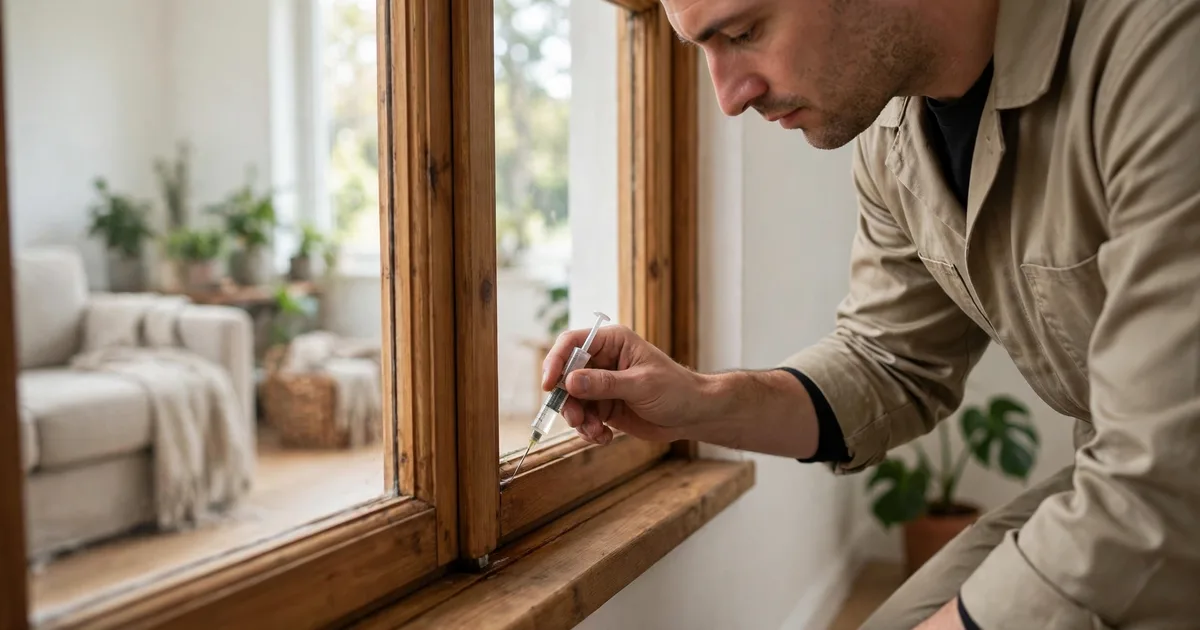
Table of Contents
- What Localized Treatment Actually Involves
- When Localized Treatment Fits
- When Localized Treatment Is Not Enough
- What Localized Treatment Does Not Cover
- Why Monitoring Afterward Matters
- When to Call a Professional
- Frequently Asked Questions
What Localized Treatment Actually Involves
A localized treatment begins with the inspection findings: which wood is infested, and how the colony’s galleries run through it. The treatment itself is applied to that wood — into the gallery spaces where the termites live and feed — so that the material reaches the colony in place. The surrounding area may be treated as well, to cover galleries that extend a short distance beyond the visible evidence.
Where infested wood is badly damaged or easy to remove, taking the member out and replacing it can be part of the job. A piece of trim, a section of fascia, or a removable component can sometimes be dealt with more completely by replacement than by treatment alone, and removing it also lets the technician see whether activity extends into the wood behind it. Which combination makes sense depends on the member involved and what the inspection found around it. Treatments are applied according to the product label and California regulations.
What localized treatment is not is a whole-house application scaled down. Nothing is applied to rooms, walls, or wood away from the identified activity. That focus is the point of the method, and it is also the source of its limits, covered below.
When Localized Treatment Fits
The clearest fit is a single drywood colony in wood that is fully accessible: one window frame with droppings below it, one piece of attic framing with kick-out holes, an infested piece of furniture. The inspection finds the activity, confirms there is no evidence of other colonies, and the technician can reach every part of the infested member. In that situation, treating the whole structure would address a problem the inspection did not find.
| Situation | Localized treatment fit |
|---|---|
| A single drywood colony in an accessible window frame or piece of trim | Often a good fit |
| An infested removable member, such as a piece of furniture or trim that can be taken out | Often a good fit, sometimes by replacement |
| Pellet droppings appearing in several rooms and in the attic | Usually not enough on its own |
| Infested wood sealed inside a finished wall with no practical access | Limited, unless access can be created or the member removed |
| Subterranean termite activity at the foundation | Not this approach; those colonies are addressed at the soil |
The comparison behind this table is laid out in our guide to localized termite treatment vs fumigation, which explains how professionals weigh extent and access when they make the recommendation.
When Localized Treatment Is Not Enough
The first failure is extent. Drywood termites start new colonies by swarming, and a home can hold several separate colonies of different ages. If the inspection finds evidence in multiple, separated areas, treating each discovered spot leaves the homeowner relying on every colony having shown itself. Colonies that produced no visible droppings or damage at inspection time would remain, and the pattern of findings is usually what moves the recommendation toward whole-structure treatment instead, as described in our article on termite fumigation and tenting.
The second failure is access. A localized treatment has to reach the galleries. Activity inside wood that is enclosed — framing sealed within finished walls, members boxed in by other construction — cannot be treated directly if there is no way to get to it. Sometimes access can be created by removing a covering or the member itself. Where it cannot, a professional should say plainly that localized treatment is not a real option for that spot, rather than treating the reachable surface and hoping it is enough.
The third failure is identification. Localized treatment of wood inside the structure is a drywood answer. Subterranean termites live in the soil and only travel into wood to feed, so treating one piece of wood does not address their colony at all. Our comparison of drywood vs subterranean termites explains how differently the two groups live, and why the identification step decides which treatments are even on the table.
What Localized Treatment Does Not Cover
A localized treatment covers the wood it is applied to and the galleries it reaches. It does not cover the rest of the structure. If a second colony exists in another room and left no evidence the inspector could detect, it is not affected by a treatment performed across the house. Homeowners should hear this stated plainly before choosing the option, because it shapes what follow-up makes sense.
It also does not prevent new infestations. Drywood swarmers from outside can start a colony in untreated wood in a later season, just as they could before the treatment. And because only the identified area was treated, the treated home has not been given any whole-structure protection. None of this makes localized treatment a poor choice when the findings fit it; it means the choice should be made with its boundaries understood, and with a monitoring plan in place for the rest of the home.
Why Monitoring Afterward Matters
Because a localized treatment is deliberately narrow, watching what happens afterward carries more weight than it does after a whole-structure treatment. The signs to watch for are the same ones that revealed the original colony: new pellet droppings below wood, discarded wings during swarm season, fresh kick-out holes. New droppings directly below the treated area in the weeks after treatment can mean something different from droppings appearing in a new room a year later, and reporting where and when you saw them helps a professional interpret what they mean.
Pentecost Pest Control provides termite inspection, monitoring, and treatment for homes and businesses in Stanislaus and San Joaquin Counties, and our termite control service page outlines how inspection and monitoring fit together. Keeping the inspection report, noting dates when you notice anything new, and scheduling follow-up checks of the areas around the treated wood turn a one-time treatment into a managed situation rather than a forgotten one.
When to Call a Professional
Call when you find a small, contained sign of activity — a single pile of pellets under one frame, wings at one window — and want to know whether it is one colony or the visible edge of something larger. Call when a member you can point to, such as a piece of trim or a stored wood item, appears infested and you want to know if treating or replacing it settles the matter. Call when another company has recommended a whole-structure treatment and you want a second inspection focused on whether the activity is actually as widespread as described. The answer in each case comes from the extent and access findings, and an inspection is how those get established.
Frequently Asked Questions
Does a localized treatment treat my whole house?
No. It treats the specific infested wood identified during the inspection, and the area immediately around it. The rest of the structure is not treated, which is why the inspection’s extent findings matter so much before this option is chosen.
Will the termites just move to another part of the house?
A drywood colony lives in the wood it occupies; it does not pick up and relocate across the home. The realistic concern is different: a separate colony that already existed elsewhere, undetected, continues on its own. That is a monitoring question, not a migration one.
Can an infested board simply be replaced instead of treated?
Sometimes. Where the infested member is removable and the inspection shows the activity is confined to it, removal and replacement can be the most complete response, and it exposes the wood behind it for checking. Where activity extends into connected framing, replacement alone is not enough.
How do I know whether my infestation is small enough for localized treatment?
By inspection. The droppings you can see show where one colony is feeding; only an inspection of the rest of the structure establishes whether it is the only one, and whether the wood involved can be reached. That extent-and-access picture is what the recommendation rests on.
What should I watch for after a localized treatment?
New droppings, new kick-out holes, and wings during swarm season, anywhere in the home — not just near the treated wood. Note the location and date, and report them. Fresh evidence near the treated member and fresh evidence in a new area point to different conclusions, and both are worth a professional look.
If you have a termite problem that looks small and contained, an inspection will show whether it truly is. Call (209) 581-5562 or request a free estimate and we will establish the extent of the activity and explain whether localized treatment fits your home.
By the Pentecost Pest Control Editorial Team
This article is for general educational purposes only. Pest conditions, regulations, and treatment options vary by property and situation. Contact a licensed pest control professional for an inspection.