
Bed bugs are small, flat, oval insects that feed on blood — usually while people sleep — and spend the rest of their time hidden in seams, cracks, and furniture joints close to where people rest. They do not fly or jump; they spread by hitchhiking on luggage, clothing, and furniture, which is why travel and secondhand furniture are behind so many introductions. Early identification matters because a small problem confined to one bed or one room is far simpler to deal with than one that has spread through a home, and bed bug eggs and hiding habits make them difficult to eliminate without a plan. This guide covers what bed bugs look like, the signs to check for, where they hide, how they spread, what a professional inspection and treatment involve in general terms, and how to lower the chance of bringing them home.
Key Takeaways
- Adult bed bugs are about the size and shape of an apple seed — flat, oval, and reddish-brown. Young bed bugs are smaller and paler, and the eggs are tiny and hard to see.
- The reliable signs are physical: live bugs in seams, shed skins, small rusty or dark spots on bedding and mattresses, and, in heavier infestations, a sweet, musty odor.
- Bites alone cannot diagnose bed bugs. Skin reactions vary widely from person to person, and some people do not react at all.
- Bed bugs hide close to where people sleep or sit for long periods: mattress seams, box springs, headboards, upholstered furniture, and baseboards.
- They spread by hitchhiking — on luggage after travel, on used furniture, and through multi-unit buildings — not because a home is dirty.
- Professional treatment is normally a process, not a single visit: eggs are harder to kill than live bugs, so follow-up visits timed to the life cycle are a normal part of the work.
- If you find the signs below, an inspection is the right next step. Pentecost Pest Control provides bed bug control for homes and businesses across Stanislaus and San Joaquin Counties.
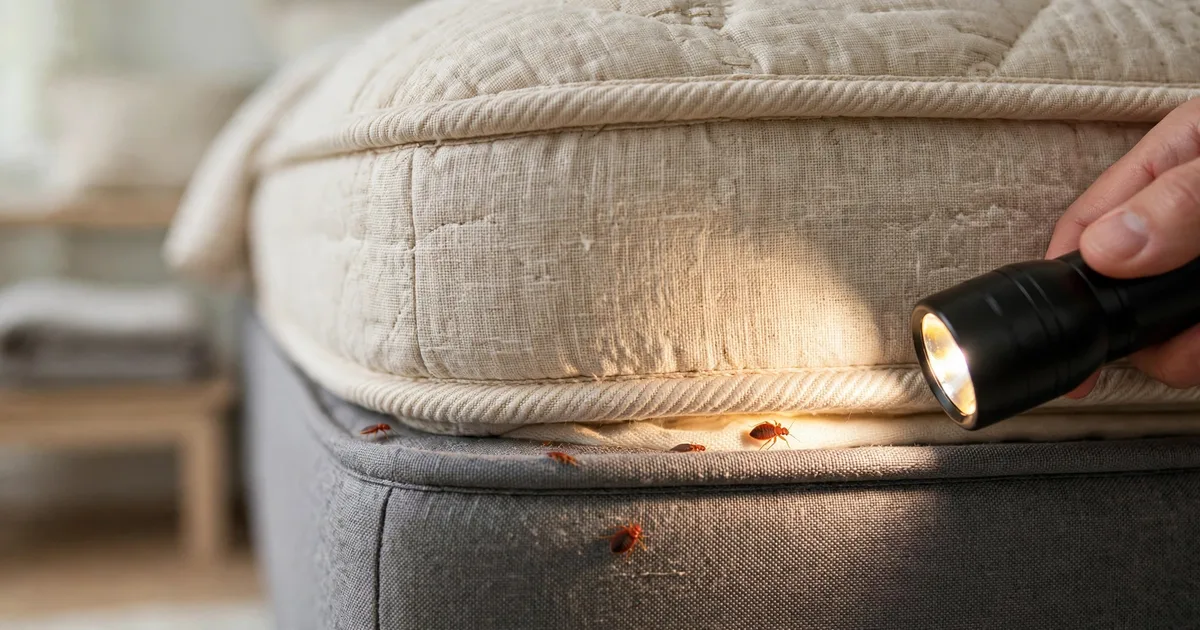
Table of Contents
- What Bed Bugs Look Like
- Signs of Bed Bugs
- Where Bed Bugs Hide
- How Bed Bugs Spread
- Bed Bugs vs. Look-Alikes
- What a Professional Bed Bug Inspection Covers
- Treatment Options in General Terms
- Preparing for Bed Bug Treatment
- How to Prevent Bed Bugs
- Bed Bugs in Rentals and Multi-Unit Buildings
- When to Call a Professional
- Frequently Asked Questions
What Bed Bugs Look Like
An adult bed bug is a small, flat, oval insect, roughly the size, shape, and color of an apple seed: reddish-brown, with a segmented abdomen and six legs. Before a meal it is thin and flat enough to slide into the seam of a mattress or the joint of a bed frame. After feeding it looks different — swollen, longer, and brighter red — which is why two bugs from the same bed can look noticeably different to an untrained eye.
The younger stages are easier to miss. Newly hatched bed bugs (nymphs) are tiny and pale, almost translucent, and they darken as they grow through several stages to adult size, shedding a skin at each stage. The eggs are smaller still — whitish, oval, and laid in clusters in the same hidden places the bugs themselves use. At that size, eggs are rarely what a homeowner spots first; the bugs, their skins, and their spots are usually what give them away.
Two identification points help separate bed bugs from other small insects found in bedrooms. First, bed bugs cannot fly and cannot jump — they only crawl. An insect that jumps is something else. Second, bed bugs are almost always found near where people sleep or rest for long stretches: beds, sofas, recliners. A look-alike insect found in a pantry or bathroom is worth identifying, but it is usually a different problem with a different answer, and the look-alikes section below covers the common ones.
Signs of Bed Bugs
Because bed bugs hide during the day and feed at night, most people discover them through evidence rather than by seeing a live bug. Here are the signs professionals take seriously.
Live bugs
The clearest sign is the insect itself, found along a mattress seam, in the folds of a box spring, behind a headboard, or in the joints of bedside furniture. Live bugs cluster in harborages — tight, dark places where several bugs rest together — so finding one bug in a seam often means more are nearby. If you find a suspect insect, take a clear photo and, if you can do it without crushing it, catch it in a sealed container. A correct identification at the start saves everyone time.
Shed skins
As young bed bugs grow, they shed their skins, and the empty shells collect in and around their hiding places. The skins look like pale, hollow copies of the bug itself, and they accumulate in seams, along baseboards behind the bed, and inside furniture joints. Skins on their own can be left over from an older problem, so an inspector will look for live activity alongside them — but skins in a bed are always a reason to look further.
Rusty or dark spots
Bed bugs leave small dark spots — their droppings — on mattress seams, bedding, and nearby surfaces, and feeding can leave small rusty or blood-colored spots on sheets. Look along the piping of the mattress, on the fabric of the box spring, and at the corners of the bed frame. A few unexplained dark spots in a line or cluster near the bed are one of the most common first clues.
A musty odor
A heavier infestation can produce a noticeable sweet, musty odor in the room, coming from the bugs gathered in their harborages. One or two bugs will not produce it, so a lack of odor means nothing either way — but a distinct musty smell in a bedroom, combined with any of the signs above, is worth acting on.
Bites — and why they cannot diagnose bed bugs on their own
Many people first suspect bed bugs because of itchy bites, and bites are a legitimate reason to check the bed. But bites alone cannot confirm bed bugs, and it is important to be honest about why. Skin reactions vary enormously: some people develop obvious, itchy welts, others living in the same home — sometimes sleeping in the same bed — show no reaction at all. Bites from other insects can look similar, and so can some skin conditions that have nothing to do with insects. There is no reliable pattern of bites that only bed bugs produce.
That cuts both ways. Bites with no physical evidence in the bed may turn out to be something else entirely. And a real infestation can be present in a home where nobody reacts to bites at all, which is one way problems go undiscovered for a long time. The inspection is what settles it: physical evidence — live bugs, skins, spots in the places bed bugs actually hide — confirms the problem in a way skin never can.
Where Bed Bugs Hide
Bed bugs stay as close as they can to the people they feed on, in places that are dark, tight, and undisturbed. In most homes, the large majority of the population is in or immediately around the bed:
- Mattress seams and tufts — the piping along the edges of the mattress is the classic hiding place, along with seams, buttons, and labels.
- Box springs — the underside and interior of a box spring, under the thin fabric dust cover, is one of the most common harborages an inspector finds.
- Headboards and bed frames — joints, screw holes, cracks, and the wall side of the headboard.
- Bedside furniture — drawer joints, the undersides of nightstands, and the seams of lamps and alarm clocks near the bed.
- Upholstered furniture — sofas and recliners where people nap or sit for long periods, in the seams and under cushions.
- Around the room — baseboards, the edges of carpet, behind picture frames and loose wallpaper, and around electrical outlets, generally close to the bed rather than across the house.
Early on, the activity is usually concentrated in one sleeping area. As an infestation grows — or when bugs are disturbed and scatter — they spread to other beds, other rooms, and items stored near the bed, including luggage and laundry. That pattern is why a professional inspection maps the whole home rather than treating the first hiding place found: treating one seam while bugs are also established in the sofa leaves the problem alive.
How Bed Bugs Spread
Bed bugs are travelers, not invaders from outdoors. They do not come in from the yard, and they are not a sign of a dirty house — they are found in clean homes and spotless hotels because what they need is not filth but people. They spread by riding along on things that move between places where people sleep.
Travel is the most common introduction route. A bug climbs into luggage or clothing in an infested hotel room, vacation rental, or hostel, rides home, and walks out when the suitcase is unpacked — ideally, from the bug’s perspective, near a bed. The trip itself does not matter; a single night away is enough if the room had bugs.
Used furniture is the second common route. A secondhand mattress, box spring, bed frame, or upholstered chair can carry bugs or eggs in its seams, and curbside furniture left out for pickup is a particular risk. Used furniture is not automatically a problem, but it should never come into a home uninspected.
Multi-unit buildings allow spread without any travel at all. In apartments and condominiums, bed bugs can move between neighboring units along shared walls, plumbing and wiring runs, and hallways — and they can be carried between units in laundry, bags, and furniture. One untreated unit can keep re-supplying the units around it, which is why building-wide coordination matters, as discussed below.
Guests and belongings account for many of the rest: overnight visitors whose own home has an unnoticed problem, children’s sleepovers, bags and coats left on a bed, and items moved out of an infested room into a clean one. None of this is anyone’s fault — a person can carry bed bugs without knowing it, which is most of how they move through the world.
Bed Bugs vs. Look-Alikes
Several other small insects turn up in bedrooms and get blamed — or credited — as bed bugs. Correct identification matters because the treatment for each is different.
| Insect | What it looks like | Where it is usually found | Key difference |
|---|---|---|---|
| Bed bugs | Flat, oval, reddish-brown, about apple-seed size as adults | Mattress seams, box springs, headboards, upholstered furniture | Feed on blood at night; do not jump or fly |
| Bat bugs | Nearly identical to bed bugs — distinguishing the two takes magnification | Homes with bats in attics or chimneys, near bat roosts | Associated with bats; if your home has or had bats, tell the inspector |
| Carpet beetles (larvae) | Small, fuzzy or banded worm-like larvae; adults are small round beetles | Baseboards, closets, under furniture, in stored natural fabrics | Feed on wool, feathers, and lint, not people; shed hairs can irritate skin and be mistaken for bites |
| Fleas | Very small, dark, laterally flattened | Carpets, pet bedding, around animals | Jump when disturbed; strongly associated with pets and the places pets rest |
Bat bugs deserve a special note: they look so much like bed bugs that telling them apart requires close examination, and their presence points to a bat roost in or near the structure that also needs attention. Carpet beetle larvae are the most common false alarm in bedrooms — their shed hairs can cause itchy bumps that look like bites, sending homeowners hunting for bed bugs that are not there. A photo or a captured specimen lets a professional settle which problem you actually have before any treatment is discussed.
What a Professional Bed Bug Inspection Covers
A bed bug inspection is a careful, hands-on visual examination of the places bed bugs hide, and it is slower work than most people expect — seams have to be lifted, furniture checked joint by joint, and box springs examined from underneath. In general terms, an inspection covers:
- The beds. Mattress seams, tufts, and labels; the box spring, including its underside and the area beneath the dust cover; the headboard, front and back; and the bed frame’s joints and screw holes.
- Furniture near the bed. Nightstands, dressers, and any upholstered chair or sofa used for sleeping or long rest, checked at seams, cushions, and joints.
- The room’s edges. Baseboards, carpet edges, and the wall behind the bed, which show whether activity has spread beyond the furniture.
- Other sleeping areas. Other bedrooms, guest rooms, and anywhere household members report bites or have moved bedding or luggage — because the map of the activity decides the treatment.
- Questions and history. When bites or signs were first noticed, any recent travel, guests, or used furniture, and any treatments already attempted. This history helps the inspector judge how long the problem has been there and where it may have come from.
The inspector is separating live activity from old signs, and one room’s problem from a whole-home one. At the end you should hear, in plain language, whether bed bugs were found, where the activity is, and what treatment is recommended and why. You can help the inspection go well by reducing clutter around beds where you can, pulling furniture slightly away from walls, and keeping pets out of the rooms being inspected — full preparation is covered in its own section below.
Treatment Options in General Terms
Bed bug treatment is planned around the inspection findings: which rooms are affected, where the harborages are, and how established the infestation is. What follows describes the main approaches in general terms. Treatments are applied according to the product label and California regulations, and there are no home-mixed or improvised versions of this work that a homeowner should attempt — the preparation and prevention sections below cover what homeowners genuinely can do themselves.
Whole-room treatment of infested rooms
The foundation of most plans is treatment of the infested rooms as a whole — not just the bed, but the furniture, baseboards, and harborages the inspection found — because treating only the visible cluster leaves eggs and hidden bugs in place to restart it. Treatment is directed at the places bed bugs live and travel, and typically extends to adjacent areas the inspection flags as at risk. What a given room receives depends on its contents and construction, and your technician should be able to explain, room by room, what is being done and why.
Heat treatment, in general terms
Heat is another established approach: the infested room or structure is heated with specialized equipment to temperatures bed bugs cannot survive, held long enough to reach into furniture and wall voids where bugs hide, and monitored throughout. Because heat reaches into harborages, it is often considered for heavier infestations or cluttered situations where other approaches are hard to apply thoroughly. It requires its own preparation — some household items cannot stay in a heated space — and it leaves no residual protection behind, which is one reason it is sometimes combined with other measures and always paired with the prevention habits below.
Follow-up visits, and why they are normal
A bed bug plan normally includes follow-up visits, and this surprises people until they understand the life cycle. Bed bug eggs are considerably hardier than the bugs themselves and can survive treatments that kill every live bug in the room. Those eggs then hatch over the following days and weeks. Follow-up visits are timed so that newly hatched bugs are dealt with before they can mature and lay eggs of their own, breaking the cycle instead of chasing it. A plan quoted as a single visit with no follow-up is worth a careful question: how will the eggs be handled? The number of visits varies with the size of the infestation and how it responds, and an honest company will explain that rather than promise a fixed ending on day one.
What treatment decisions depend on
- Which rooms and items are infested, and how heavily
- Whether activity is confined to one bed or spread through the home
- The construction of the rooms and the amount of clutter and stored items
- Whether the home is a single house or a unit in a multi-unit building, where neighboring units affect the plan
- What preparation the household can realistically complete
Be cautious with anyone who quotes a treatment without inspecting, or who cannot show you where the activity is. The inspection findings come first; the plan follows from them.
Preparing for Bed Bug Treatment
Preparation is the homeowner’s share of the work, and it makes a measurable difference to how well treatment works, because treatment cannot reach bugs hidden inside sealed bags, packed closets, and piles of belongings. In general terms, preparation usually involves reducing clutter around beds and in infested rooms; laundering bedding and clothing and drying them thoroughly, following the care labels on the items; bagging cleaned items so they are not re-exposed; moving furniture away from walls so edges and baseboards can be reached; and vacuuming seams and edges, with the vacuum emptied outside afterward. Your company will give you its specific preparation list, because the details depend on the treatment planned — and the details matter enough that we have written a separate, complete checklist article, How to Prepare for Bed Bug Treatment: A Complete Checklist, which walks through the process room by room. Follow the checklist you are given rather than improvising: over-preparing in the wrong direction, such as moving belongings from an infested room into clean rooms or into a car, can spread the problem to new areas.
How to Prevent Bed Bugs
No prevention habit can make a home immune — bed bugs only need one ride — but the habits below address the routes by which they actually arrive, and they work.
When traveling
- In a hotel or rental, look before you settle in: pull back the bedding and check the mattress seams and the headboard for live bugs, skins, or dark spots.
- Keep luggage off the bed and off the floor where you can — a luggage rack, pulled away from the wall, is a better place for a suitcase than the bed.
- Keep worn clothing in a bag rather than on the bed or an upholstered chair.
- When you get home, unpack in a laundry area or garage rather than on the bed, launder travel clothing promptly, and inspect the suitcase itself — seams and pockets included — before storing it away from the bedrooms if you can.
With used furniture
- Inspect any secondhand bed, frame, sofa, or upholstered piece carefully — seams, joints, undersides — before it comes inside, and pass on anything with unexplained dark spotting along its seams.
- Avoid mattresses and upholstered furniture left out on the curb, however sound they look; discarded bedding is a common way bed bugs change addresses.
- When in doubt, leave the item outside the home until it can be inspected properly.
Around the home
- Mattress and box spring encasements, in general terms, remove the seams and folds bed bugs prefer, make inspections far easier, and can seal in any bugs already inside so they cannot feed or escape — they are a standard part of many post-treatment plans for exactly those reasons.
- Reduce clutter beside and under beds, so harborages are fewer and inspections quicker.
- After guests or travel, a quick check of the guest bed’s seams is a small habit that catches problems at the one-bug stage, when they are simplest.
- Vacuum mattress seams and baseboards along the bed from time to time as part of ordinary cleaning, and look at what you find rather than assuming.
Most of our residential pest control customers treat bed bug prevention as a travel habit rather than a housekeeping standard: check the room, mind the luggage, inspect what comes home. That is where the risk actually lives.
Bed Bugs in Rentals and Multi-Unit Buildings
Bed bugs in an apartment or rental home add a layer a single house does not have: neighbors, shared walls, and a landlord or property manager who needs to be part of the response. A few general points apply.
First, tell your landlord or property manager promptly — as soon as you suspect a problem, not after you have confirmed it yourself. In a multi-unit building, one unit’s bed bugs are a building issue, because bugs move along shared walls and utility runs, and professional treatment works best when the units around an infested one are inspected too. Prompt reporting protects you as well as the building: it creates a record of when the problem was raised and what was done about it.
Second, cooperate with the inspection and treatment process — access for inspections, preparation of the unit, and follow-up visits. Landlords and tenants in California each have responsibilities in keeping a home habitable and in allowing problems to be dealt with, and the practical shape of that is a landlord who arranges professional treatment and tenants who prepare and allow access. If you are unsure what is expected of you in your building, ask the property manager and the pest control company — both would rather explain than reschedule.
Third, resist treating the unit yourself with sprays bought over the counter. Used on your own, in general terms, sprays can scatter bed bugs deeper into wall voids and into neighboring units without eliminating them, turning one unit’s problem into several. Tell the property manager, let the building’s professional plan handle it, and put your effort into the preparation steps you are given. Hotels, motels, and other lodging businesses face the same dynamics at commercial scale — guest turnover makes early detection the whole game — and our commercial pest control work includes bed bug response for those properties.
When to Call a Professional
Homeowners do the most good at the two ends of a bed bug problem: noticing it early and preventing the next one. Identification, treatment, and anything involving products applied in a home belong with professionals. Call for an inspection when:
- You find a live bug, shed skins, or clustered dark spots in a bed, sofa, or recliner
- Bites are appearing and you want the bed itself checked rather than guessed about
- You have come home from a trip and found a suspect insect in luggage or bedding
- A used piece of furniture has arrived and you want it assessed before it spreads anything
- Signs are appearing in more than one room, or in a rental unit you manage or live in
- You have tried to handle it yourself and the signs keep returning
A few honest words about doing it yourself: bed bugs are unusually easy to make worse. Treating only the bugs you can see leaves eggs and hidden harborages untouched; moving infested bedding or furniture through the house spreads them; and products applied in ways their labels do not allow can scatter the infestation instead of ending it. The result homeowners describe most often is months of effort while the problem quietly grows. That is not a failure of effort — it is the nature of an insect that hides this well and reproduces this steadily. A professional plan is mostly a map and a sequence: find all of it, treat all of it, and return on the life cycle’s schedule until it is finished.
Pentecost Pest Control is a family-owned company based in Modesto, at 3501 Coffee Rd, Modesto, CA 95355. We serve residential and commercial customers in San Joaquin and Stanislaus Counties, inspect before we recommend, and explain what we find in plain language. If something in this guide looks familiar from your own bed, start with the inspection.
Frequently Asked Questions
Can I tell I have bed bugs from the bites alone?
No. Bites are a reason to check, never a diagnosis. Reactions to bed bug bites vary widely — some people in an infested bed show obvious welts while others show nothing at all — and other insects and skin conditions can produce similar marks. What confirms bed bugs is physical evidence: live bugs, shed skins, or their spots in the places bed bugs hide. An inspection looks for that evidence, which is why it settles questions bites cannot.
How much does bed bug treatment cost?
It depends on factors that can only be assessed at the property: how many rooms are affected and how heavily, the size of the home, how much preparation and clutter work is involved, the treatment approach the findings call for, and how many follow-up visits the infestation needs. A multi-unit situation can add coordination with neighboring units. Because of that, honest pricing follows an inspection rather than a phone guess — and be wary of a firm figure quoted before anyone has looked.
Do I have to throw away my mattress?
Usually not. In many cases the mattress and box spring can be treated and then sealed in encasements, which is part of the standard plan. Discarding furniture feels decisive but often is not: bugs are rarely only in the mattress, and a new bed brought into an untreated room is simply re-infested. Where an item is so heavily infested that your inspector recommends removal, they will tell you how to take it out without spreading bugs through the home — that judgment belongs in the inspection, not in a guess at midnight.
How many treatments does it take to get rid of bed bugs?
More than one visit is normal, and the reason is the eggs. Eggs are hardier than live bugs and can hatch after the first treatment, so follow-up visits are timed to catch newly hatched bugs before they mature and reproduce. The total number of visits depends on the size and spread of the infestation and how it responds, which is why a good plan describes the follow-up schedule up front and adjusts it based on what each visit finds.
Can bed bugs spread from one apartment to another?
Yes. In multi-unit buildings, bed bugs move along shared walls, plumbing and wiring runs, and hallways, and they ride between units in laundry, bags, and furniture. That is why a single unit’s problem is treated as a building issue: the units next door, above, and below are typically inspected as part of the plan, and prompt reporting to the property manager is what makes that coordination possible.
Did I get bed bugs because my house is not clean?
No. Bed bugs are hitchhikers, not a housekeeping verdict. They are found in immaculate hotels and spotless homes because they need people, not dirt — they arrive in luggage, on used furniture, and with guests. Clutter does give them more places to hide and makes treatment harder, which is why reducing it is part of preparation, but cleanliness neither causes an infestation nor explains one.
Ready to have your home checked? Call (209) 581-5562 or request a free estimate. Tell us what you found — a bug in a seam, spots on the bedding, bites you cannot explain — and we will schedule an inspection and explain the next steps.
By the Pentecost Pest Control Editorial Team
This article is for general educational purposes only. Pest conditions, regulations, and treatment options vary by property and situation. Contact a licensed pest control professional for an inspection.