
Most pest problems at a house are not really insect problems or rodent problems first — they are maintenance problems. Pests move in where a home offers them three things: water, shelter, and a way in. A slow plumbing drip is a water supply. A shrub packed against the siding is shelter. A gap at a pipe penetration, a torn vent screen, a door sweep worn down to nothing — each one is an open door. The encouraging part is that most of what denies pests those three things is ordinary upkeep: fixing leaks, clearing drainage, trimming, sealing, and storing things properly. The catch is timing. Every Central Valley season changes which pests are active and which maintenance gaps they exploit, so pest prevention works as a calendar — a set of recurring checks and fixes done before each season’s pressure arrives, not after the ants are already in the pantry.
This guide lays out that calendar for homes in Stanislaus and San Joaquin Counties: the habits that run all year, then spring, summer, fall, and winter in turn, the roof and drainage work that ties the whole thing together, a simple checklist to run through each season, and an honest look at what maintenance cannot do on its own.
Key Takeaways
- Pests exploit maintenance gaps — water, shelter, and entry points — so most pest prevention is ordinary upkeep done on a schedule.
- Five habits run all year: control water and fix leaks, store food sealed, manage waste, keep the foundation line clear, and seal gaps as you find them.
- Spring is for resetting after the rains: screen and vent repairs, gutters and downspouts, early wasp nest checks, and irrigation start-up.
- Summer pressure in the Central Valley is heat-driven: ants hunting water, flies, mosquitoes in standing water, and fallen fruit feeding rodents and wasps.
- Fall is when rodents and wildlife look for winter shelter, so roofline checks, a chimney cap, door sweeps, and sealing come before the first storms.
- Winter is the moisture season: drainage, downspouts discharging away from the foundation, indoor rodents, and a post-storm attic check.
- Maintenance lowers pest pressure season after season, but it does not remove an established infestation — that takes an inspection and a professional plan.
- If you find signs that keep coming back despite good upkeep, that is the inspection trigger. Pentecost Pest Control provides residential pest control for homes across Stanislaus and San Joaquin Counties.
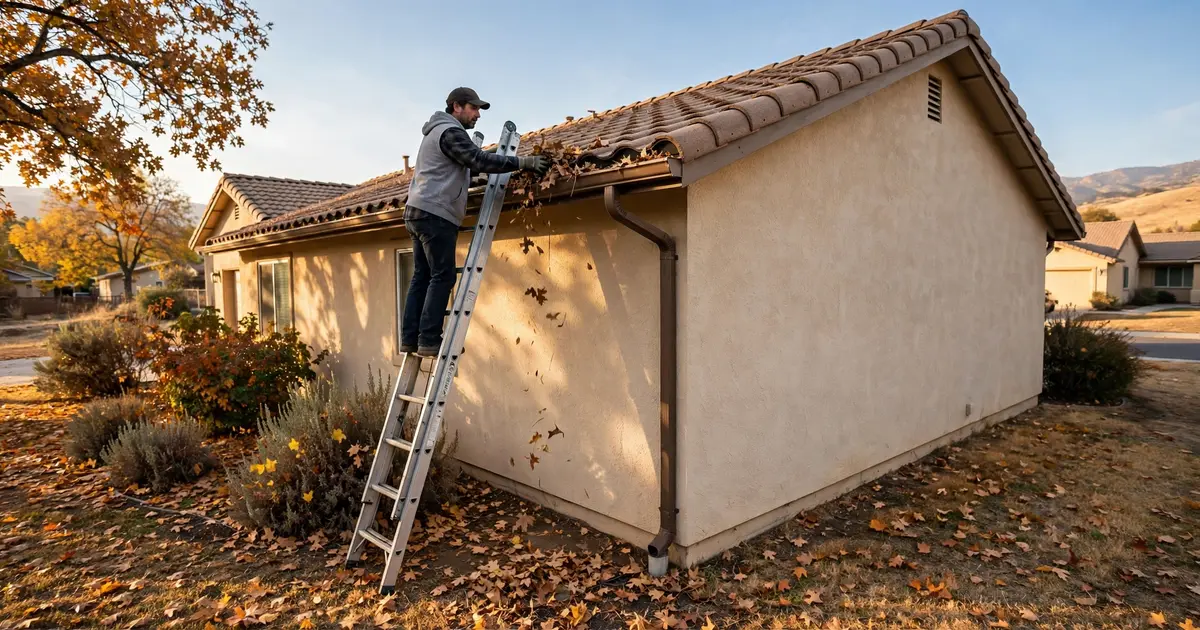
Table of Contents
- The Year-Round Basics: Five Standing Habits
- Spring: Reset After the Rains
- Summer: Heat-Driven Pressure
- Fall: Closing the House Before Winter
- Winter: Rain, Moisture, and Indoor Pests
- The Roof and Drainage Connection
- A Simple Annual Checklist
- Knowing the Limits of Maintenance
- When to Call a Professional
- Frequently Asked Questions
The Year-Round Basics: Five Standing Habits
Seasons change the emphasis, but five habits underneath them never change. They are not glamorous, and none of them takes long at a time. What makes them work is that they are standing habits rather than annual events — done in small pieces, all year, they remove most of what pests come looking for.
1. Keep water moving away from the house, and fix leaks promptly
Water is the single most common thread in pest problems. Cockroaches, ants, termites, drain flies, and mosquitoes all build around moisture, and rodents drink where they find it. The habit has two parts. First, drainage: gutters and downspouts carry roof water away from the foundation, soil and landscaping slope away from the house rather than toward it, and irrigation does not puddle against the foundation line. Second, repairs: a slow drip under a sink, a weeping water heater valve, a leaking hose bib, a cracked irrigation line — each one is a permanent water source in a dry climate, and insects will organize around it. Fixing leaks when they are small is pest prevention in its plainest form.
2. Store food sealed, including the food that is not yours
Pantry goods, pet food, and birdseed are the three food stores most homes keep, and all three attract pests when they sit in opened bags and boxes. Flour, grains, cereal, nuts, and dried fruit go into sealed, rigid containers — which also makes stored-product insects far easier to spot and contain if they ever arrive in a package. Pet food belongs in a sealed bin rather than an open bag in the garage, and birdseed stored in the open is rodent food with a label on it. Bowls matter too: pet food left out overnight, indoors or on a patio, feeds ants, cockroaches, rodents, and visiting wildlife in rotation.
3. Manage waste like it matters, because to pests it does
Kitchen waste is the most concentrated food source a home produces. Trash and recycling containers with lids that close fully, kept a reasonable distance from doors rather than tight against the wall where it is handy, remove the feeding station. Rinse recyclables that held food or drink. Take kitchen trash out regularly rather than letting it sit, and keep the area around outdoor bins swept — spilled waste under a bin feeds flies and ants even when the bin itself is closed. Compost, where a household keeps it, belongs away from the house and turned regularly.
4. Keep the foundation line clear and visible
The strip of ground where the yard meets the house should be the most boring part of the property: no dense shrubs pressed against the siding, no mulch piled high against the wall, no stacked firewood, stored lumber, or clutter leaning on the foundation. There are two reasons. Shelter is one — vegetation and stored material against the wall are harborage, the protected hiding and travel space pests live in. Visibility is the other. When the foundation line is clear, you can see the slab or foundation wall, spot a mud tube, a trail of ants, a new hole, or a damaged vent screen, and notice when something changes. A foundation you cannot see is a foundation you are not inspecting.
5. Seal gaps as you find them
Homes open up slowly: caulk shrinks, weatherstripping compresses, screens tear, and the holes where pipes and cables pass through walls are rarely sealed tightly in the first place. The habit is to treat every gap you notice as a small job to close rather than a cosmetic detail — caulk and seal around plumbing and utility penetrations, fit or replace door sweeps, repair torn window and vent screens, and cover pipe openings with escutcheon plates or mesh where appropriate. Mice need only a small opening, and insects need far smaller ones, so the cumulative effect of closing gaps as they appear is large. Sealing done a little at a time, whenever something is noticed, beats a heroic weekend of it once a decade.
Spring: Reset After the Rains
Spring in the Central Valley is the reset season. The rains are ending, the soil is still moist, everything is growing — including pest populations — and the house is coming out of winter with a list of small damages nobody has looked at since fall. Work done in spring pays off all year, because it lands before the summer pressure builds.
Ants and the first trails
As soil warms, Argentine ants resume traveling in force, and the first long trails appear along foundation lines, sidewalks, and fence lines, heading for food and water. Spring is when to walk the exterior and note where trails run and where they reach the house — at a pipe penetration, a crack in the stucco, a shrub touching the wall. Seal the entry points you find, trim the vegetation bridges, and correct whatever the trail is traveling to: a dripping hose bib, pet food on the patio, a planter saucer full of water. Trails dealt with at the source in spring are a smaller problem than trails discovered in July. Our General Household Pest Guide for Central Valley Homes covers how to recognize the pests behind the signs you find on these walks.
Termite swarm season, in general terms
Spring is also when subterranean termites swarm — winged termites leaving the colony to start new ones, often on warm days after rain. Swarmers, or piles of their discarded wings on windowsills and porches, are a sign worth taking seriously, and they are a sign to call for an inspection rather than a maintenance task to handle yourself: the question an inspector answers is whether the swarm came from a colony in the yard or one feeding on the house. The maintenance side of spring termite awareness is the unglamorous part — mud tubes spotted on a clean, visible foundation line during your walk-around, wood kept off the ground, and soil and mulch kept from burying the bottom edge of siding.
Wasp queens and early nest checks
In spring, fertilized wasp queens come out of winter shelter and start new nests — the small, golf-ball-sized starter nests that appear under eaves, porch ceilings, shutters, and inside play equipment and barbecue cabinets. A nest found at that stage involves a handful of wasps. The same nest found in late summer can involve a colony. The spring habit is simply to look: walk the eaves and covered areas every few weeks in early spring and note anything being built. An active, established nest is a reason to call a professional rather than reach for it yourself — nests in wall voids especially, which are not a knock-it-down job. Catching the location early, while you are the one who found it, is the homeowner’s contribution.
Screens, vents, and winter damage
Winter storms loosen and tear things. Spring is the repair pass:
- Window screens torn or pushed out, which are summer’s open door to flies and mosquitoes
- Attic and foundation vent screens damaged or missing — the entry point rodents, birds, bats, and insects share
- Weatherstripping and door sweeps that no longer seal
- Loose or lifted roofline trim and fascia gaps that appeared over winter
Gutters, downspouts, and the last of the rain debris
After the rains, gutters hold a winter’s worth of leaves and sediment, and a clogged gutter overflows exactly where it does the most harm — down the fascia and against the foundation. Clear gutters and downspouts in spring, confirm each downspout discharges well away from the house, and check that the splash blocks and extensions are still where winter left them. This is also the moment to look at downspout joints and seams that opened up during the season.
Vegetation and irrigation start-up
Spring growth closes the gap between plants and house fast. Trim shrubs off the siding, cut tree limbs back from the roofline — limbs touching the roof are bridges for ants, spiders, rodents, and wildlife alike — and pull mulch and leaf litter back from the foundation. Then start the irrigation system up with your eyes open: run each zone and look for broken heads, cracked lines, and heads spraying the foundation wall or soaking the soil along it. Overspray that wets the house daily is a moisture problem running on a timer, and it is at its easiest to fix in spring before the schedule settles in.
Summer: Heat-Driven Pressure
A Central Valley summer is long, hot, and dry on the surface — and it drives pests toward the water, food, and cool shelter a house provides. Summer maintenance is mostly about water management and not feeding things.
Argentine ants come in for water
When the yard bakes, Argentine ant colonies send trails indoors looking for moisture: under sinks, at pet water bowls, around bathroom plumbing, at the condensate drip of an air conditioner. The summer habits are small and specific. Fix drips the week you notice them rather than at the season’s end. Refresh pet water bowls and wipe up around them. Check that irrigation is not running so long or so often that soil against the foundation stays wet, and move watering earlier in the day so surfaces dry. Trails that keep reappearing at the same entry point after the water is corrected are telling you where a gap needs sealing — or, if they persist, that the colony pressure around the house is more than maintenance alone will answer.
Flies and the waste routine
House flies peak with the heat, and they breed in waste and decaying material outdoors, then come in through doors and gaps. Summer is when the waste habits from the year-round list earn their keep: lids closed, bins rinsed when they need it, spilled material cleaned up rather than hosed toward the foundation. Door discipline matters too — a garage or patio door standing open through a summer afternoon is a fly entry program. Inside, drain flies in floor drains and little-used sinks come from the organic film inside the drain itself; regular use, flushing, and mechanical cleaning of the drain are homeowner maintenance, and drains that keep producing flies after cleaning deserve a closer look at the plumbing.
Mosquitoes and the standing water audit
Mosquitoes need standing water to breed, and in irrigation season a Valley yard manufactures it: plant saucers, buckets, wheelbarrows, toys, tarps sagging with water, clogged gutters, neglected fountains and birdbaths, low spots that stay puddled after the sprinklers run. The summer habit is a weekly walk-and-tip: dump anything holding water, scrub saucers and birdbaths when you refresh them, keep pool and fountain equipment running and maintained, and fix the low spot or the leaking valve that puddles on its own. Very small amounts of water are enough for mosquitoes, which is why the audit has to be about containers and details rather than just the obvious pond in the corner.
Cockroaches, garages, and clutter
Warm months are cockroach months. The large outdoor species live in the yard’s moist, sheltered places and wander in at night; garages are their beachhead, and a garage full of cardboard, stored items on the floor, and a water source is harborage with a roof on it. Summer is a practical time to thin garage and storage clutter, get stored goods off the floor and into sealed bins, and keep the gap under the garage door sealed as well as the weatherstrip allows. Indoor species are a different matter — small cockroaches breeding in kitchen harborage are an established-infestation problem, and the limits section below addresses it plainly.
Fallen fruit and pet food in orchard country
Much of the Central Valley lives within reach of orchards, and a great many of its backyards have fruit trees of their own — citrus holding into summer, stone fruit dropping through it. Fallen and rotting fruit on the ground is a feeding station for rodents, wasps, ants, and flies, and it sits right next to the house. The summer habit: pick up fallen fruit regularly rather than weekly-ish, harvest what you will use, and do not let windfalls accumulate under the tree. Pet food follows the same rule as the rest of the year, with higher stakes in summer: feed pets, then pick the bowl up, rather than leaving food standing on a patio overnight.
Attic heat and wildlife, in general terms
A summer attic is brutally hot, and homeowners reasonably stay out of it. Two light-touch checks still fit the season: listen. Wildlife that moved in during spring — squirrels, raccoons, bats — announces itself by sound, usually at dawn, dusk, or overnight, and by odors or staining that were not there before. From the ground, look at the roofline: a vent screen hanging loose, a new gap at a roof intersection, staining below an eave opening. Anything active in the structure is a professional matter, handled by inspection, exclusion, and removal in line with California Department of Fish and Wildlife rules — the homeowner’s summer job is noticing early, not investigating in person.
Fall: Closing the House Before Winter
Fall is the season when the direction of pest movement reverses. Through summer, pressure came from the yard toward water and food. As nights cool and the first storms approach, rodents and wildlife start looking for winter shelter — and the shelter they are evaluating is your attic, your crawl space, and your wall voids. Fall maintenance is about closing the house before that search begins in earnest, and before rain makes roof and drainage problems expensive.
Roofline, vents, and the chimney
The fall walk starts high. From the ground, and from a ladder where you are comfortable working, check the entry points wildlife and rodents actually use:
- Attic, gable, and foundation vents with screening intact and firmly attached
- Gaps at roof intersections, eaves, and soffits, and fascia wood that has gone soft
- Plumbing and vent stacks where they pass through the roof, and the flashing and seals around them
- The chimney: a cap in place and in good repair closes what is otherwise an open shaft into the house, used by raccoons, squirrels, birds, and bats
What you find determines the fix — screening, sealing, or repair — and anything that involves an animal already inside is not a sealing job at all. Sealing an opening with animals in the attic traps them and makes a worse problem, which is why exclusion work is sequenced after inspection, in line with California Department of Fish and Wildlife rules. Our wildlife problems around homes guide covers the six animals involved and the signs each one leaves.
Door sweeps, garage seals, and thresholds
The ground-level doors get their own fall pass. Exterior door sweeps should meet the threshold along their whole length — hold a light test on a dark evening if you want the honest answer — and the garage door’s bottom seal and corner gaps deserve the same attention, since the garage is where rodents usually enter first. A worn sweep is a small, inexpensive part; replacing it in fall is one of the highest-value hours on this entire calendar.
Firewood, moved out and stacked right
Firewood season and rodent season arrive together. Wood stacked against the house or under an eave is shelter, harborage, and a covered walkway to the wall, all in one pile — and it can carry insects in with it. Stack firewood away from the house, off the ground on a rack or rails, and bring indoors only what you are about to burn. The same rule applies to lumber, stored equipment, and anything else planning to spend the winter leaning on the foundation.
Gutters again, and sealing before the first storms
The spring gutter cleaning has a fall twin: leaves and debris that collect through summer and early fall will clog gutters exactly when the first real storms arrive, so clean them again before the rains and confirm downspouts run clear. While you are at the exterior with a ladder out, finish the sealing list before the weather turns: failed caulk at penetrations and joints, gaps at siding transitions, openings where cables and lines enter. Our rodent exclusion and proofing guide walks through the proofing approach in detail — materials, the size of gap that matters, and the order the work goes in.
The yard wind-down
End the growing season by removing what pests winter in: spent garden plants and dense groundcover against the house, leaf litter accumulated along the foundation and in window wells, and the brush pile that was going to be dealt with eventually. Trim limbs back from the roof before storm season loads them with wind and wet weight. A lean yard going into winter offers far less shelter close to the house than a lush one left to collapse in place.
Winter: Rain, Moisture, and Indoor Pests
Winter in the Central Valley is the wet season, and its pest story is mostly a moisture story. Rain tests every drainage weakness the house has, rodents that found shelter are now living indoors, and the household itself — holiday cooking, stored food, delivered boxes — creates its own indoor pest opportunities.
Drainage under real conditions
Summer drainage checks are theoretical; winter storms are the audit. During and after the first heavy rains, walk the property: are downspouts discharging away from the foundation or dumping at the wall? Is water standing against the house anywhere, in the crawl space, or in low areas of the yard? Did a downspout joint separate or an extension wash away? Water standing at the foundation through winter feeds the moisture problems — and the termites and other pests that follow moisture — that the rest of the calendar works to prevent. Correct what the storm showed you while it is still showing.
Rodents and occasional invaders indoors
By winter, the rodents that matter are the ones already inside: scratching in walls and ceilings, droppings in the garage, pantry, and along wall lines, gnawed packaging in storage. Indoor rodent sign in winter is not a maintenance note — it is an inspection reason, because the exclusion work that answers it has to be sequenced with getting the animals out. Occasional invaders make their own winter appearances: earwigs, sowbugs, and similar moisture-driven insects at thresholds, garages, and ground-floor bathrooms. Small numbers point back to moisture and door seals — check the sweeps and dry out the area — while steady numbers point to a drainage or harborage condition outside the wall.
Stored-product pests and holiday food storage
Winter is when households stock food: baking flour, grains, nuts, dried fruit, spices bought for the season and then stored for months. Stored-product pests — the small moths and beetles that live in dry goods — arrive inside packages and spread between them in a warm pantry. The winter habits are storage habits: dry goods into sealed containers rather than opened bags and boxes, older stock rotated forward and used first, and a look through the pantry every so often for webbing, debris, or insects in a package. Anything found infested comes out of the pantry entirely; the container habit is what keeps one package from becoming a shelf-wide problem. This is general household upkeep, not a treatment question — but a pantry problem that keeps restarting after the storage is fixed deserves an inspection to find what you are missing.
The attic after storms
After major storms, and a few times through the season, check the attic from the hatch with a flashlight. You are looking for three things: water — stains, drips, wet insulation that mark a roof leak while it is still a roofing repair rather than a moisture and pest condition; animal sign — droppings, nesting material, disturbed insulation that says something has moved in; and odor or staining that is new. Look, note, and come back down. If the check finds evidence of animals living up there, do not disturb them and do not seal anything — that situation is handled by inspection, exclusion, and removal in line with California Department of Fish and Wildlife rules, and winter can involve young animals and timing considerations that a professional sequences properly. A leak found early belongs to a roofer; the reason it appears in a pest guide is that a wet attic does not stay only a roofing problem for long.
Cardboard and the delivery season
Winter brings deliveries, and deliveries bring corrugated cardboard — which is shelter and harborage stacked in the garage. Break boxes down promptly and get them into recycling rather than accumulating a cardboard corner through the season. It takes minutes, and it removes one of the quieter things a winter garage offers cockroaches and rodents.
The Roof and Drainage Connection
One section of this guide deserves to be pulled out on its own, because it decides more pest outcomes than any product ever applied: the condition of the roof and the drainage attached to it.
The logic is direct. A roof in good repair keeps bulk water out of the attic and walls. Gutters collect what the roof sheds, and downspouts deliver it away from the foundation. When any part of that chain fails — shingles damaged or missing, flashing and vent seals cracked, gutters clogged and overflowing, downspouts broken, disconnected, or discharging at the wall — water goes where it should not: into attic wood and insulation, down fascia and siding, and into the soil at the foundation line. Moisture in those places is the common ingredient in a long list of pest problems. It softens and decays wood that termites and carpenter ants then work in, sustains the damp conditions cockroaches and other moisture pests live on, keeps foundation soil wet for subterranean termites, and leaves standing water where mosquitoes breed. A surprising share of pest inspections end with findings that are, at root, roof and drainage findings.
That is why the obvious maintenance items recur through this calendar — gutters cleaned in spring and fall, downspouts checked under storm conditions, roofline condition walked twice a year. They are also why we offer them as a package: our home maintenance bundles combine pest control with a roof inspection and downspout maintenance, on the reasoning that the three belong in the same visit — the roofline gets looked at, the drainage gets maintained, and the pest findings get read alongside the conditions that explain them. Where an inspection turns up roof damage needing repair, that work belongs to a roofing contractor; the bundle covers the inspection and the drainage maintenance, and it gives you the findings to hand to the roofer.
A Simple Annual Checklist
The whole calendar compresses into one list. Run the row for the season as it approaches, and keep the standing habits running underneath all of them.
| When | Main pressure arriving | The checks and fixes |
|---|---|---|
| Year-round | Food, water, and shelter seekers of every kind | Fix leaks promptly; food and pet food stored sealed; waste lids closed and bins kept in order; foundation line clear and visible; seal gaps as you find them |
| Spring | Ant trails, termite swarmers, wasp nests starting, everything growing | Walk trails to their sources; note swarmer or wing evidence and call for inspection; check eaves for starter nests; repair screens, vents, and sweeps; clear gutters and downspouts; trim vegetation off the house; inspect irrigation for leaks and overspray |
| Summer | Ants hunting water, flies, mosquitoes, cockroaches, rodents at fallen fruit | Water audit weekly — tip and scrub containers; waste routine kept tight; door discipline; garage clutter thinned and storage sealed; fallen fruit picked up; pet bowls picked up after feeding; listen for wildlife and check the roofline from the ground |
| Fall | Rodents and wildlife seeking winter shelter, first storms | Roofline, vent, and chimney-cap check; door sweeps and garage seals replaced as needed; firewood stacked away from the house and off the ground; gutters cleaned again; exterior sealing finished before storms; yard wind-down cleared |
| Winter | Indoor rodents, moisture problems, stored-product pests | Watch drainage during storms and correct what it shows; act on indoor rodent sign with an inspection; dry goods sealed and rotated, pantry checked; attic checked from the hatch after storms; delivery cardboard broken down promptly |
Printed or saved, the list is the article. Everything above it is explanation.
Knowing the Limits of Maintenance
An honest guide has to say plainly where upkeep stops working, because the costliest pest mistake a homeowner makes is treating an established problem as a maintenance problem and caulking harder at it.
Maintenance controls conditions: food, water, shelter, and entry. An established infestation is no longer about conditions arriving — it is about a population already living inside the structure, and populations do not respond to housekeeping the way pressure does.
- German cockroaches breed inside appliance voids, cabinet framing, and hinge gaps, with egg cases sheltered on the females themselves. A spotless kitchen makes professional work perform better; it does not remove a population living where cleaning cannot reach.
- Termite colonies live in the soil or inside the wood. Prevention — moisture control, wood off the ground, a visible foundation — lowers the odds and catches signs early. None of it treats a colony already feeding, and swarmers or mud tubes are inspection findings, not maintenance items.
- Bed bugs arrive as hitchhikers in luggage and furniture and live in the furniture and fabric of a room. No amount of sealing or cleaning addresses a population established in a bed frame and baseboards.
- Wildlife in an attic is a sequencing problem as much as anything: animals have to be out before openings close, young may be present, and California rules govern how and when the work happens. The maintenance mindset — find hole, seal hole — applied at the wrong moment creates the worst version of the problem.
When findings point to an established problem, the shape of the answer is an inspection first, then a plan sized to what was actually found. Treatments are applied according to the product label and California regulations. The maintenance calendar still matters afterward — it is what keeps a solved problem from re-forming — but it works alongside the plan, not instead of it. Homeowners who keep up the calendar and still see the signs in the next section are not failing at maintenance. They are getting the information the calendar exists to produce: something here needs a professional’s eyes.
When to Call a Professional
Most of this guide is homeowner territory — observation, upkeep, and small repairs. Call for an inspection when:
- You find swarmers or discarded wings indoors, mud tubes on the foundation, or pellet-like droppings under wood — the termite signs maintenance cannot evaluate
- Ant trails keep reappearing at the same place after the water, food, and sealing work is done
- You hear recurring noises in the attic, walls, or chimney, or find droppings in the attic, crawl space, or garage
- Rodent sign appears indoors — droppings, gnaw marks, nesting material — at any time of year
- A wasp nest is established in a high-traffic area, in a wall void, or anywhere someone in the household reacts badly to stings
- Mosquito pressure stays heavy after the standing water audit has been run honestly and neighbors’ sources are not the obvious explanation
- Small cockroaches are appearing in the kitchen or bathroom — the indoor-breeding species, which does not resolve with upkeep
- You are buying a home and want a baseline inspection of the attic, crawl space, and foundation before small findings become yours
- A wildlife animal is in the structure, under it, or in the chimney — do not seal, corner, or handle it; call
Pentecost Pest Control is a family-owned company based in Modesto, at 3501 Coffee Rd, Modesto, CA 95355. We serve residential and commercial customers in San Joaquin and Stanislaus Counties, inspect before we recommend, and explain what we find in plain language. If your calendar is kept up and something on this list has still shown up, that is exactly the situation an inspection is for.
Frequently Asked Questions
How much of pest prevention is really just home maintenance?
Most of the pressure side of it. Pests come to a house for food, water, and shelter and stay where they can get in, and maintenance is what controls those four things — drainage and leaks, sealed food storage, a clear foundation line, closed entry points. What maintenance does not do is remove a population already established inside the structure. Think of it as two different jobs: the calendar keeps the house from inviting and supporting pests, and professional service answers the findings the calendar turns up.
If I can only keep up with a few habits, which ones matter most?
Start with water, because it feeds more pest problems than anything else on the list: fix leaks promptly, keep drainage moving away from the foundation, and do not let irrigation soak the house. Second, the foundation line — kept clear and visible, it removes shelter and turns your own eyes into an inspection system. Third, sealing as you go. A household running just those three habits consistently is ahead of most of the pressure this guide describes.
How often should I walk around my house looking for problems?
Seasonally, tied to the checklist — four deliberate walks a year, each aimed at the season arriving — plus a look after major storms in winter. In between, the habits do the watching: you notice a drip because you fix leaks, a torn screen because you repair them, a trail because the foundation line is clear enough to see it on. The walk is a backstop, not the whole system.
Will sealing and maintaining my house keep every pest out?
No, and any service that frames it that way is overselling. Sealing and upkeep sharply reduce what gets in through the structure and what survives once inside — they remove most of the invitation. But some pests arrive by other routes entirely: bed bugs and cockroach egg cases hitchhike in luggage, boxes, and furniture; flying insects come through open doors; a determined raccoon climbs. Maintenance changes the odds and the scale of problems, and it catches what does arrive early, which is a great deal — it is just not a promise of a house no pest ever enters.
I keep up with maintenance and I still have pests. What am I doing wrong?
Possibly nothing. Pressure varies by property — a home against an orchard edge, a canal, or a neighbor’s neglected yard works against more than a home in the middle of a maintained block — and some problems, once established, are simply not maintenance problems anymore. Breeding cockroaches in appliance voids, a termite colony in the soil, rodents already living in the attic: the calendar was never going to answer those, and finding them is one of the things the calendar is for. The next step is an inspection to establish what is actually present, not a more strenuous version of the same upkeep.
How much does seasonal pest prevention service cost?
It depends on factors an inspection establishes: the size and construction of the home, the pest pressure and history the property carries, what the program includes — inspection, treatment in general terms, monitoring, and, in a home maintenance bundle, a roof inspection and downspout maintenance alongside the pest control — and how often visits are scheduled. A small, newer home with a clean history and a large, older property at an orchard edge are different jobs. Honest pricing follows an inspection rather than a guess over the phone, and a written quote should say what it covers and what it does not.
Ready to put your home on a seasonal routine? Call (209) 581-5562 or request a free estimate. Tell us what the calendar has been turning up — a leak that will not stay fixed, trails that keep coming back, noises overhead — and we will start with an inspection and explain the next steps.
By the Pentecost Pest Control Editorial Team
This article is for general educational purposes only. Pest conditions, regulations, and treatment options vary by property and situation. Contact a licensed pest control professional for an inspection.