
Integrated pest management — IPM — is a way of running pest control for a business that starts with inspection and identification, leads with prevention, keeps score with monitoring, and uses treatment, including pest control products, as a targeted tool when the findings call for it. Instead of a technician treating on a fixed calendar whether anything is active or not, an IPM program asks three questions at every visit: What is here? Why is it here? What is the smallest step that changes that? The answers are written down, so over time the business holds a record of pest pressure and what was done about it, not just a stack of invoices.
For a restaurant in Modesto, a warehouse in Stockton, or an office anywhere in Stanislaus or San Joaquin County, the pests differ and the stakes differ, but the logic is the same. This article walks through the IPM cycle step by step, shows what each step looks like in a real building, explains the parts of the program that belong to the business itself, and ends with how to read an IPM proposal before you sign one. For a broader tour of commercial service itself, our article Commercial Pest Control in the Central Valley: A Complete Guide for Businesses covers the service side; this one stays on the method.
Key Takeaways
- IPM is a decision process, not a product — and not a promise that products will never be used. Inspection and identification come first, and every action follows from findings.
- Prevention does the heavy lifting: exclusion, sanitation, moisture control, waste handling, and landscaping remove the food, water, and shelter pests need.
- Monitoring turns pest control into a record. Devices checked on a schedule produce counts that show whether pressure is rising, falling, or moving to a new area.
- Thresholds decide when to act. The amount of activity that triggers a response is set in advance, by pest and by area, so one insect in a warehouse corner and one insect in a kitchen get different responses.
- When treatment is used, it is targeted — placed where the pest lives and travels, at the source the inspection found. Treatments are applied according to the product label and California regulations.
- The business is a partner in the program. Employee reporting, housekeeping, and follow-through on maintenance fixes are a large part of why IPM works.
- If pest problems keep recurring at your business, an inspection is the place to start. Pentecost Pest Control builds commercial pest control programs for businesses across Stanislaus and San Joaquin Counties on the steps below.
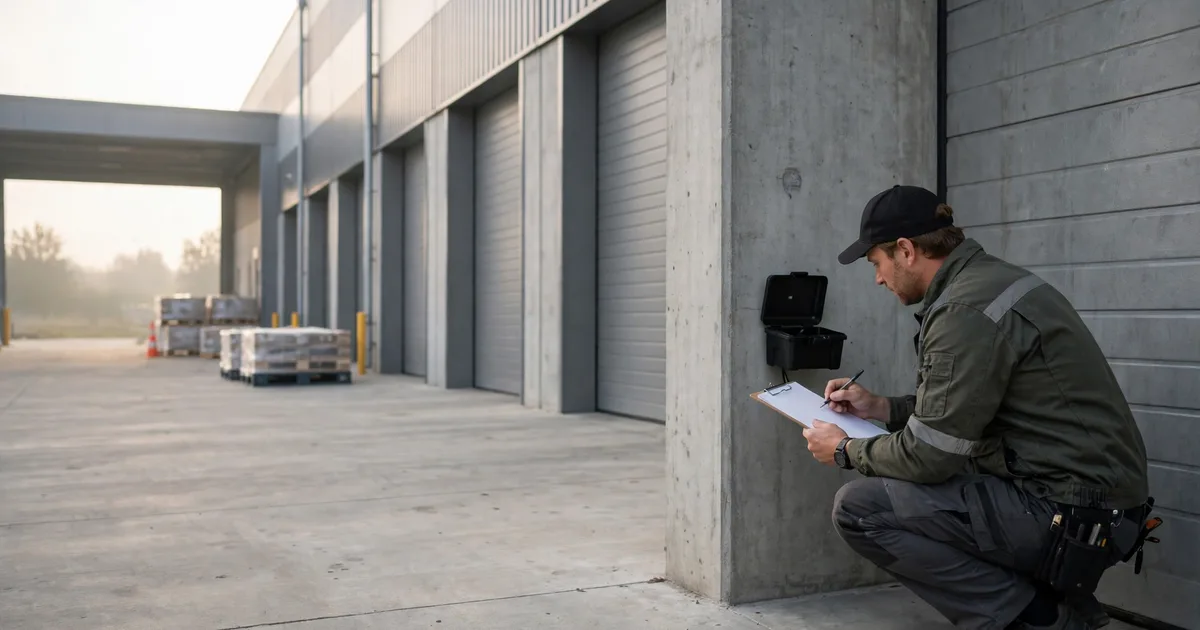
Table of Contents
- What Integrated Pest Management Is
- What IPM Is Not: Two Misconceptions
- The IPM Cycle, Step by Step
- What IPM Looks Like in a Real Business
- What the Business Itself Is Responsible For
- The Paper Trail: Documentation a Business Can Show
- How IPM Differs by Business Type
- How to Evaluate an IPM Proposal
- When to Call a Professional
- Frequently Asked Questions
What Integrated Pest Management Is
At its simplest, integrated pest management means managing pests with a combination of methods chosen for the actual situation — the pest, the building, and the business operating in it — rather than relying on a single method applied the same way everywhere. The word “integrated” is the point: inspection, prevention, monitoring, physical controls, and targeted treatment are combined, and each one makes the others work better.
The approach is not a marketing invention. The University of California Statewide Integrated Pest Management Program (UC IPM) publishes general IPM guidance for California — for homes, landscapes, farms, and structures — and the framework it describes is the one commercial providers work from: identify the pest, understand why it is there, prevent what you can, monitor what remains, and act on evidence.
That framework applies to nearly every pest a Central Valley business deals with:
- Insects such as cockroaches, ants, flies, and stored-product pests in dry goods
- Rodents — rats and mice moving between the exterior, the walls, and food storage
- Occasional invaders such as spiders, earwigs, and crickets entering from landscaping
- Birds and other wildlife at roofs, docks, and waste areas, handled with exclusion and deterrence in line with California rules
IPM also changes the relationship between a business and its pest provider. A reactive service waits for the phone call — something was seen in the dining room, in a guest room, on a shelf — and responds to that sighting. An IPM program is watching before the sighting happens, which is why most of what follows is about inspection, conditions, and records rather than about treatment. Treatment still matters. It is simply no longer the whole plan.
What IPM Is Not: Two Misconceptions
Because “IPM” gets used loosely in sales material, two misunderstandings follow it around. Both are worth correcting before the steps, because each one produces a program that fails.
Misconception 1: IPM means pesticides are never used. It does not. IPM means products are used deliberately — after the pest is identified, when monitoring shows activity over the threshold set for that area, and in the places the inspection found the pest living and traveling. A program that rules out products entirely can leave a business exposed when prevention alone cannot handle what is already established: a German cockroach population breeding inside kitchen equipment, or bed bugs found in a lodging room, are not problems that housekeeping by itself resolves. The honest goal is not zero product. It is no product used without a reason, and no product asked to do the job that a door sweep, a drain cleaning, or a sealed gap should have done.
Misconception 2: IPM is the regular spray service with a new name. Calendar-based treatment — a technician applying product on a set route and schedule regardless of what is or is not active — is close to the opposite of IPM. If a program never produces findings, counts, or recommendations, and nothing about the service ever changes in response to what is found, then monitoring is not driving any decisions and the label is doing all the work. A fair test to apply to any provider, including us: ask what the last three monitoring results changed about the service. In a working IPM program, that question has concrete answers.
A smaller third misconception is that IPM only suits large facilities. The loop described below scales down as well as up. A small cafe runs the same cycle as a distribution warehouse — fewer monitors, fewer areas, the same questions.
The IPM Cycle, Step by Step
IPM is usually drawn as a cycle rather than a checklist, because the last step feeds the first: what the records show changes what the next inspection looks for. Here is each step as it runs in a business setting.
Step 1: Inspect and identify
Everything starts with a survey of the whole property — interior and exterior, front of house and back, from the roofline to the waste pad. The inspector is doing three jobs at once: identifying which pests are present or likely, finding the conditions that support them, and mapping the areas where pressure will show first.
Identification deserves emphasis, because look-alike pests need different plans. A German cockroach breeds indoors and lives in equipment and cabinet voids; an American cockroach mostly lives outdoors and wanders in. Treating the building for the wrong one wastes everyone’s time. The same is true of roof rats, which enter at the roofline, and Norway rats, which burrow at ground level — the entry points an exclusion plan must close are in different places. A good initial inspection also records the conducive conditions: the torn dock seal, the dumpster sitting against the wall, the leak under the dish machine, the pallet of dry goods stored on the floor. Those notes become the prevention list in Step 3.
The output of this step is a baseline: what was found, where, and under what conditions, plus a map of the risk areas that monitoring in Step 4 will watch.
Step 2: Set action thresholds
A threshold is the amount of pest activity at which the program stops watching and starts acting. Setting thresholds in advance converts “someone saw a bug” into a decision the business and the provider have already made together.
Thresholds are set by pest and by place, because the same insect means different things in different rooms:
- Near zero in sensitive areas. A single cockroach in a food preparation area, or any bed bug evidence in a lodging room, is over threshold the moment it is confirmed. Food businesses operate under county health rules that treat pest activity in food areas seriously, and a customer’s tolerance in a dining room is effectively zero as well.
- Low for flies and stored-product pests. A few drain flies point to a cleaning task; rising counts in monitors near dry storage point to an infested product that has to be found.
- Any interior rodent activity is over threshold. Droppings, gnaw marks, or a monitor hit inside the building triggers action, while rodent pressure outdoors is monitored against the building’s own history.
- Higher tolerance in low-risk zones. A spider in a warehouse corner or an earwig under an exterior door is recorded and watched; it does not trigger treatment by itself.
Thresholds are written into the program and revisited as records accumulate. They are what keep a program proportionate — acting hard where the risk is real, and not treating a warehouse corner like a kitchen.
Step 3: Prevent — the conditions work
Prevention is where IPM earns its keep, because most commercial pest problems are condition problems first. Five categories cover most of it.
Exclusion. Keep pests out physically. Door sweeps on exterior and dock doors, seals on dock levelers, screens on vents and windows, and sealing around pipes, conduits, and other penetrations through walls and floors. Mice need only a small gap, and cockroaches and ants need smaller ones, so the exclusion list from an inspection is usually longer than owners expect — and every item on it is permanent work, done once, that reduces pressure every day after.
Sanitation. Remove the food. Degreasing around cooking equipment, cleaning floor drains and keeping them maintained, wiping down the areas under and behind equipment, storing food and ingredients in sealed containers off the floor, and rotating stock so older product moves first and spills get noticed. Sanitation in an IPM program is specific — aimed at the exact residues and areas the inspection found supporting pests — rather than a general instruction to “keep it clean.”
Moisture. Fix the water. Leaks under sinks and dish machines, condensate lines that drip into wall voids, standing water in mop areas and mechanical rooms, and irrigation that soaks the foundation all support cockroaches, drain flies, rodents, and ants. The pest provider finds and reports these; the repair itself usually belongs to the business or its plumber, which is why Step 3 only works when the business treats the list as its own homework.
Waste handling. Feed nothing outside, either. Dumpsters with lids that close and actually get closed, positioned away from doors where the site allows, on pads that get cleaned; grease containers kept sealed and serviced; cardboard broken down and removed rather than stacked by a back door. The waste area is the single most common exterior pest source an inspector finds at a food business.
Landscaping and the exterior. Reduce the shelter against the building. Vegetation trimmed back off walls and the roofline, mulch and groundcover kept from piling against the foundation, standing water corrected, and exterior lighting positioned so it does not draw night-flying insects straight to entrances — lights set away from doors, shining toward them, pull insects to the fixture instead of the doorway. Firewood, pallets, and stored equipment kept off the ground and away from walls remove harborage that rodents and spiders use as staging areas.
Step 4: Monitor
Monitoring is the step that separates IPM from good intentions. In general terms, it means placing monitoring devices at the risk points the inspection identified — insect monitors in kitchens, storage rooms, and along likely travel routes; rodent monitoring stations along exterior walls, at docks, and in ceiling and void areas — and checking them on the schedule the program sets.
A monitor’s job is to measure, not to solve. Each check produces a count by location: what was caught or seen, where, and how that compares with the last check. Plotted over months, those counts answer questions no single visit can. Is pressure rising as summer heat builds? Did the dock seal repair actually end the rodent hits on the east wall? Is the fly activity coming from the drains or from the waste area? Monitoring also catches new problems at the stage where they are small — a few stored-product moths in one monitor is a search of one aisle, not a warehouse-wide event.
Monitor placement is not fixed forever. Devices move as findings change, and an area that runs clean for a long period may be checked less often while a new pressure point gets more attention. That adjustment, driven by records, is the cycle working as intended.
Step 5: Intervene — targeted action when thresholds are crossed
When monitoring or a sighting shows activity over the threshold for an area, the program responds — starting with the least disruptive step that addresses the cause, and escalating only as findings require.
Often the first intervention is not a treatment at all. It is correcting the condition: cleaning the drain the flies are breeding in, sealing the gap the monitors identified as the entry route, removing the infested product the moths came from, moving the stored items that were sheltering rodents. Mechanical steps come next in many cases — trapping for rodents in areas where activity is confirmed, for example, placed and checked under the same monitoring discipline.
When treatment is called for, IPM treatment is targeted: directed at the cracks, voids, equipment harborage, and exterior points where the identified pest lives and travels, rather than applied broadly to every surface. Treatments are applied according to the product label and California regulations, and the label is the authority on how any product may be used, where, and with what precautions for the people and operations in the building. Your technician should be able to explain what is being applied, where, and which finding it answers.
What the business gets at this step is a decision it can follow: the count crossed the threshold we set, here is the source we found, here is the step we are taking, and here is what your team needs to do alongside it.
Step 6: Document and review
The final step closes the loop. Every visit produces a record — findings, monitor counts, actions taken, and recommendations — and periodically those records are reviewed together for trends: which areas stay active, which recommendations remain open, whether thresholds still fit the business, and what the coming season is likely to bring. In the Central Valley, that seasonal review is practical, not ceremonial: summer heat drives ants and flies, harvest season stirs up rodent and insect pressure around food and agricultural sites, and winter rain pushes rodents toward buildings. A program that reviews its own records adjusts monitor placement, visit focus, and prevention priorities ahead of those shifts instead of reacting after them.
Then the cycle repeats, with the next inspection informed by everything the records hold.
What IPM Looks Like in a Real Business
Steps are easier to picture walked through a building. Here is where each part of the cycle lands in the areas most businesses share.
Receiving and the loading dock. More pest problems arrive on a truck than crawl in on their own. Corrugated cardboard can carry cockroaches; dry goods can carry stored-product pests. IPM at the dock means doors that stay closed and seal when shut, incoming goods given a look before they go to storage, pallets stored so the wall line behind them can be inspected, and monitors watching the dock corners. Break down shipping cardboard promptly — it is both food packaging residue and harborage in one material.
The kitchen or food-handling area. The inspection focus is grease, water, and voids: behind and under cooking equipment, inside cabinet and equipment cavities, at floor drains, and around plumbing. Prevention is the degreasing and drain routine, food stored sealed and off the floor, and a closing routine that leaves no residue out overnight. Monitors sit where cockroaches and flies would travel, checked against the near-zero threshold this area carries.
Dry storage and stockrooms. Shelving set off the floor and pulled far enough from walls that the space behind can be seen and cleaned. Stock rotated so the oldest product is used first and a damaged or infested bag is found in weeks, not months. Spills cleaned the day they happen. Monitors for stored-product pests placed by the goods they protect, so a hit points to a section of shelving rather than the whole room.
Waste and recycling areas. Lids closed, containers sealed, pads rinsed, and the area kept as far from entry doors as the site allows. This is where fly and rodent pressure usually starts outdoors, so exterior monitors concentrate here and at the dock. If the waste area is clean and the counts there stay low, the building’s whole pest picture usually improves with it.
The exterior and grounds. The inspection walks the roofline, the foundation, and every penetration. Vegetation off the building, drainage moving water away, and no stored materials against walls. Overhead matters too: standing water in clogged drainage and debris on a roof are pest conditions, not just building wear — on the properties we serve, that is the same thinking behind our home maintenance bundles, which pair pest control with roof inspection and downspout maintenance so the conditions above the walls get checked on a schedule instead of after a leak.
Front of house and offices. Pest pressure is lower here, and thresholds reflect it — but break rooms, employee food storage, houseplants, and entry doors still get inspected and monitored lightly, because the first public sighting of a pest usually happens in the area everyone assumed was fine.
What the Business Itself Is Responsible For
An IPM program is a partnership, and saying so is not a way of shifting blame — it is a description of where the levers are. The provider controls inspection, monitoring, recommendations, and treatment. The business controls the building’s daily conditions, and most recurring commercial pest problems trace back to a condition that stayed open rather than to a treatment that failed. The business’s share of the program:
- Name a contact. One person who receives the service report, owns the recommendation list, and can get a door unlocked or a repair scheduled. Programs stall when findings land with no one.
- Report sightings promptly, with locations. A simple log — date, what was seen, where — kept by a register, a kitchen pass, or a back door turns scattered employee sightings into data the technician can act on. A cockroach reported the day it is seen, with the room named, is a small job; the same cockroach reported a month later is a bigger one.
- Keep the housekeeping the program assumes. The closing routine, the drain and grease schedule, spill cleanup, food stored sealed and off the floor. These are not extras added to the program; they are Steps 3 and 5 running between visits.
- Follow through on maintenance fixes. When the report lists a torn door sweep, a leaking trap, a broken dock seal, or a gap around a pipe, the fix belongs to the business or its contractors. Every visit that re-lists the same open item is a visit where that item keeps feeding the pest count.
- Give access and keep habits aligned. Areas to be serviced need to be reachable at the scheduled time, and staff habits need to match the program — a kitchen door propped open through a delivery afternoon undoes the exclusion work the program paid for.
None of this is unusual work. It is the ordinary discipline of a well-run building, aimed by the findings. That is most of what “integrated” means in practice.
The Paper Trail: Documentation a Business Can Show
Because every step of the cycle is written down, an IPM program produces documentation as a byproduct — and for many businesses, the records turn out to be as valuable as the pest control itself. In general terms, the file a business can expect to hold includes:
- Service reports for each visit: areas inspected, pests found and where, monitor counts, actions taken, and recommendations made.
- Monitoring records over time: counts by device and location, which together show the trend — the difference between “we had a cockroach in March” and “activity has fallen every month since the drain work was done.”
- Corrective action notes: the recommendations from reports, marked with what has been completed and what is still open, so nothing depends on anyone’s memory.
- Periodic summaries: the trend review from Step 6, in writing, for management.
Who asks to see this kind of file? County health inspectors who visit food businesses ask about pest management as part of their work. Landlords and property managers ask what program is in place at a property. Some customers — a distributor storing food products, a facility hosting visitors — ask their vendors and landlords how pests are managed. And the business’s own management uses the file to answer a simpler question: is this working? Records do not decide any inspection outcome, and no honest provider will promise one. What records show is a pattern of diligence — a program that was watching, deciding, and acting the whole time, rather than a scramble after a problem surfaced.
How IPM Differs by Business Type
The cycle is the same everywhere; the pests, thresholds, and monitoring density change with what the business does. A quick comparison:
| Business type | Pests that usually matter most | Where the IPM program concentrates |
|---|---|---|
| Restaurants and food service | Cockroaches, flies, rodents | Drains and grease, dry storage, waste area, door and dock exclusion, near-zero thresholds in food areas |
| Grocery and food retail | Stored-product pests, cockroaches, rodents | Receiving, dry goods storage, cardboard handling, waste, shelf-level monitoring |
| Warehouses and distribution | Rodents, stored-product pests, birds at docks | Perimeter and dock monitoring, pallet storage patterns, exterior pressure, roofline exclusion |
| Hotels and lodging | Bed bugs, cockroaches, rodents | Room inspection routines, housekeeping reporting, a defined response when a room shows evidence |
| Offices | Ants, spiders, occasional invaders | Break rooms and food storage, entry points, exterior landscaping, seasonal pressure |
| Schools and childcare centers | Ants, cockroaches, rodents | Kitchens and food storage, exclusion and sanitation first, grounds and waste areas |
Two patterns are worth noticing. First, the more a business handles food or hosts guests, the lower its thresholds and the denser its monitoring. Second, in every row the concentration is on conditions and entry — the business types differ, but Step 3 is always the longest column. A warehouse fights its battle at the dock and the perimeter; a restaurant fights its battle at the drains and the waste pad; neither battle is mainly about treatment.
How to Evaluate an IPM Proposal
Whether you are choosing a first provider or reviewing a current one, an IPM proposal should let you answer these questions from the document itself:
- Does it start with an inspection, and do you receive the findings in writing? A program quoted without anyone walking the property is a route schedule, not IPM.
- Does it name what it covers? The pests, the areas, the monitoring points — and, just as usefully, what it does not cover.
- Are thresholds and monitoring spelled out? How many devices, where, how often they are checked, and what counts as over threshold for your kind of business.
- Does it divide the work honestly? The prevention items the provider handles, the ones your team handles, and how open items are tracked until they close.
- Does it explain how treatment decisions get made? Findings and thresholds driving action, instead of a set number of applications promised in advance.
- What lands in your hands after each visit? A service report with counts and recommendations, and a periodic review of trends — or just an invoice.
- Does the price discussion follow the findings? Cost in an IPM program is driven by factors an inspection establishes: the size and layout of the property, the number of areas and monitoring points, the pests and pressure involved, how often visits are needed, and how much initial prevention work the building requires. A real figure makes sense after that inspection, not before it.
The red flags are the mirror image: a quote given over the phone sight unseen, a plan that is only a visit frequency, no records offered, and recommendations that never appear because nothing is ever found. Pest pressure exists at every commercial property in the Central Valley; a program that reports none is not looking.
When to Call a Professional
Businesses do the most good on the daily conditions — housekeeping, reporting, repairs. Inspection, identification, monitoring design, and treatment belong with professionals. Call for an inspection when:
- Pests are being seen in customer-facing or guest areas, even occasionally
- Sightings repeat in the same area despite your team’s cleaning and fixes
- You find droppings, gnaw marks, nesting material, or insect evidence in storage or food areas
- Employees report sightings but nobody is tracking where or how often
- You are moving into a new space, reopening one that sat vacant, or adding food service or storage to an existing operation
- A customer, a landlord, or an inspector has raised pest activity and you need findings and a plan in writing
- You already have a service but receive no findings, counts, or recommendations from it
Pentecost Pest Control is a family-owned company based in Modesto, at 3501 Coffee Rd, Modesto, CA 95355. We provide commercial pest control for businesses across San Joaquin and Stanislaus Counties, built the way this article describes: inspection first, prevention and monitoring doing the daily work, targeted action when the records call for it, and a written report your team can act on. If your business has been treating the same pest problem in circles, the inspection is where the circle breaks.
Frequently Asked Questions
Does integrated pest management mean pesticides are never used?
No. IPM means products are one tool among several, used when inspection and monitoring show they are needed — aimed at the identified pest, in the places it lives and travels. Prevention, exclusion, and sanitation carry the everyday load, and ruling products out entirely would leave some established problems, like German cockroaches breeding inside equipment, without a workable answer. Treatments are applied according to the product label and California regulations whenever they are part of the plan.
Is an IPM program more expensive than a standard spray service?
It depends on factors established at the property: the size and layout of the building, how many areas and monitoring points the program needs, the type of business and the thresholds it carries, the level of pest pressure, and how much initial prevention work — sealing, waste, drainage — the inspection finds waiting. A program built on findings may cost differently from a bare visit schedule in either direction, and the honest comparison is against what each actually does. That is why pricing follows an inspection rather than a phone quote.
How often will a technician visit under an IPM program?
As often as the findings support. Visit frequency is set from the initial inspection — the business type, pest pressure, and monitoring density — and then adjusted by the records: an area running clean over time may need less attention, while rising counts earn more. Food-handling and lodging businesses generally run on tighter cycles than offices or low-pressure storage. The schedule is an output of the program, not the program itself.
What does our staff actually have to do?
Four things, mostly: report sightings promptly with the location, and keep a simple log; hold the housekeeping the program assumes — closing routines, drain and grease care, food stored sealed and off the floor; follow through on the maintenance items reports identify, like door sweeps and leaks; and keep access open at service times. None of it requires pest expertise. It requires the findings to land with a named contact who acts on them.
What records will we have, and who might ask for them?
A service report after each visit, monitoring counts by location over time, and a corrective action list showing which recommendations are done and which are open. County health inspectors ask food businesses about pest management, landlords and property managers ask what program covers their property, and some customers ask the businesses they work with. The records show a managed program and a trend — they are evidence of diligence, offered as exactly that and nothing more.
We have an active pest problem right now. Do we need something else before IPM?
No — an active problem is handled inside the same cycle. The inspection identifies the pest and its source, targeted action addresses what is established, and prevention and monitoring keep it from rebuilding. What changes is the order of emphasis in the first visits: intervention comes early and heavy, and the prevention list gets worked while activity is being brought down. Starting with a problem is the most common way IPM programs begin.
Ready to build a pest program on findings instead of a calendar? Call (209) 581-5562 or request a free estimate. Tell us what kind of business you run and what you have been seeing, and we will start with an inspection and explain the program we would put in place.
By the Pentecost Pest Control Editorial Team
This article is for general educational purposes only. Pest conditions, regulations, and treatment options vary by property and situation. Contact a licensed pest control professional for an inspection.